New to finance, fintech and crypto? Start here
Financial news assumes you already know how money, payments and markets fit together. This path builds that picture in five stages, one explainer at a time.
The short answer
Read in this order: how money and banks work, how payments move, how blockchains work, how crypto markets trade, then who regulates them. Each stage links to explainers built from primary sources, and the glossary defines every term along the way.
Key takeaways
- Crypto makes more sense once you know how ordinary money and payments already work.
- Each stage below takes about an hour of reading and links to the next.
- Every explainer cites its sources, so you can check any number yourself.
- Nothing on this path is investment advice; it explains how things work, not what to buy.
Why start with money and banks rather than crypto?
Most of the money people use is not cash. It is bank deposits, and the Bank of England has explained that commercial banks create most of that money when they make loans1. Crypto projects describe themselves against this system: stablecoins copy the dollar, blockchains try to replace bank ledgers, and regulators reach for banking rules. Without the baseline, the comparisons are hard to judge.
Stage 1 — How money works
- 1
How banks create money
Start with how banks create money: deposits, loans and the role of the central bank.
- 2
How interest rates work
Then read how interest rates work and why central banks move them.
- 3
What inflation does to savings
Finish with inflation explained and try the inflation calculator.
How does money actually move between people?
Before blockchains promised faster payments, card networks and instant payment systems were already moving money. Knowing how they work tells you which crypto claims are new and which are old problems with a new label.
Stage 2 — Payments and fintech
- 1
How card payments work
Read how card payments work to meet issuers, acquirers and networks.
- 2
Instant payments
Then real-time payments explained covers systems that settle in seconds.
- 3
Open banking and neobanks
Open banking and neobanks show how apps plug into the banking system.
What is a blockchain, in plain terms?
The Bitcoin white paper proposed a payment system that works without a trusted intermediary by having a network of computers agree on a shared history of transactions2. Almost every crypto-asset since then builds on that idea, so understanding it once pays off across the whole site.
Figure · The five-stage reading path
- 01Moneybanks, rates, inflation
- 02Paymentscards, instant, apps
- 03Blockchainsblocks, keys, consensus
- 04Marketsorders, liquidity, ETFs
- 05Rulesregulators and laws
Stage 3 — How blockchains work
- 1
The core idea
How blockchain works covers blocks, hashes and nodes.
- 2
Agreement
Proof of work vs proof of stake explains how networks agree.
- 3
Keys and wallets
Crypto wallets and keys explains who really controls funds.
How do crypto prices get set?
Crypto prices come from trading platforms that match buyers and sellers. The SEC's investor education site notes that a market order fills at or near the current bid or ask, not necessarily at the last traded price3. That single fact explains a lot of beginner surprises.
Stage 4 — Crypto markets
- 1
The market's structure
How crypto markets work maps the platforms and participants.
- 2
The order book
Order books explained shows how a price is formed.
- 3
Stablecoins and ETFs
Stablecoins and spot bitcoin ETFs link crypto to the dollar and to Wall Street.
Who protects you, and when are you on your own?
Protection depends on who regulates the firm you use. In a 2023 investor alert the SEC warned that crypto platforms may lack important investor protections4. The last stage explains the main rulebooks and how to check a firm yourself.
Stage 5 — Rules and regulators
- 1
Who regulates what
SEC vs CFTC and MiCA cover the US and the EU.
- 2
Check before you trust
How to check a regulated firm walks through the official registers.
- 3
Know the risks
Read our risk disclosure before acting on anything you learn.
Risk warning
Education, not advice
This path explains how things work. It does not tell you what to buy, and crypto-assets can lose all of their value.
Frequently asked questions
How long does the whole path take?
Each explainer takes roughly 7 to 9 minutes to read, so the five stages fit into a few evenings. You can stop after any stage.
Do I need any maths?
No. Where numbers matter, the explainers show worked examples, and the calculators in our Tools section do the arithmetic and show the formula.
Can I skip straight to crypto?
You can, but the crypto pages often compare things to banks, cards and markets. If a comparison does not make sense, come back to stages one and two.
Where do I look up a word I do not know?
Use the glossary, which defines terms in one or two sentences and links to the full explainer.
The bottom line
Read the stages in order: money, payments, blockchains, markets, rules. Each one makes the next easier, and every page cites the documents behind it so you can check what you read.
Sources
- Money creation in the modern economy (Quarterly Bulletin 2014 Q1) — Bank of England, 2014 Primary source
- Bitcoin: A Peer-to-Peer Electronic Cash System — Satoshi Nakamoto, 2008 Primary source
- Types of Orders — Investor.gov, U.S. Securities and Exchange Commission Primary source
- Exercise Caution with Crypto Asset Securities: Investor Alert — Investor.gov, U.S. Securities and Exchange Commission, 2023 Primary source
How we checked this page: every figure above links to the numbered source it came from. Spotted an error? Tell the desk — see our editorial policy.
Read next
 Finance · ExplainerHow do banks create money when they make a loan?Most of the money in your account was never printed. It was typed into existence by a bank when someone borrowed. Here is how that works, and what keeps it in check.
 Fintech · ExplainerHow do card payments work, from tap to settlement?A card payment feels instant, but it is really a short conversation between several companies, followed by a slower exchange of money behind the scenes. Here is who is involved, what each one does and who pays for it.
 Tech · ExplainerHow does a blockchain work, and why is it so hard to change?A blockchain is a shared record book that thousands of computers keep in sync without a boss. Here is how the pieces fit together, from a single transaction to a chain of blocks.
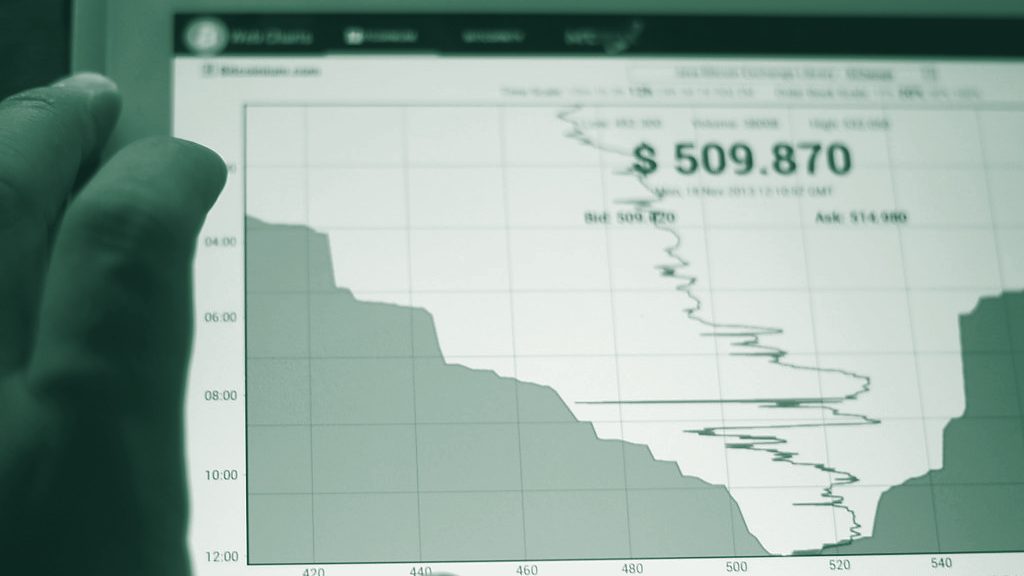 Markets · ExplainerHow do crypto markets work, and who decides the price?There is no single crypto exchange and no official closing price. Here is how many separate venues, two kinds of trading machinery and a patchwork of rules add up to the number on a price ticker.
 Policy · ExplainerSEC vs CFTC: which US regulator is in charge of crypto?For years the answer to "who regulates crypto in America?" was "it depends". In 2026 the two main market regulators published a shared map, but Congress has not yet written the split into law.