How do crypto markets work, and who decides the price?
There is no single crypto exchange and no official closing price. Here is how many separate venues, two kinds of trading machinery and a patchwork of rules add up to the number on a price ticker.
Education only, not investment, tax or legal advice. Crypto-assets are high-risk — risk disclosure.
The short answer
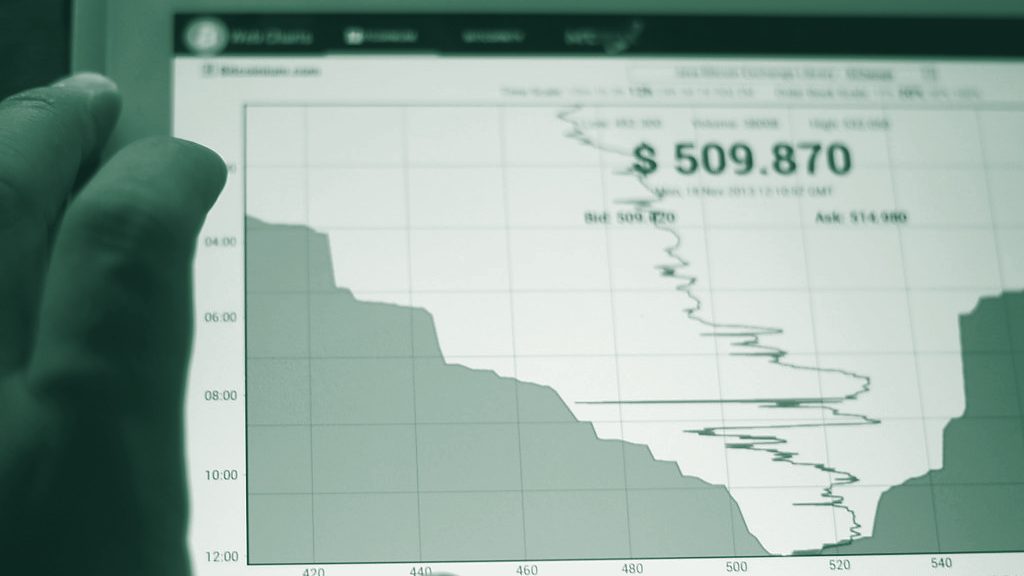
Crypto trades on many separate venues at once: company-run platforms with order books, decentralised exchanges run by code, and regulated funds that hold coins. Each venue prices from its own trades, so the price you see is one venue's last trade or an average of several.
Key takeaways
- Crypto-assets trade on many unconnected venues, around the clock, rather than on one central exchange.
- Centralised platforms match buyers and sellers in an order book; decentralised exchanges price trades from the balance of tokens in a pool.
- Prices can differ between venues, and research has found the gaps are widest between countries.
- Stablecoins act as the cash leg of much crypto trading because they move on blockchains at any hour.
- In the US, spot crypto trading has far lighter oversight than crypto derivatives, and many platforms combine roles a stock market keeps apart.
Where does crypto actually trade?
Shares of a listed company trade on linked exchanges under one market-wide rulebook. Crypto-assets do not. A token such as bitcoin can be bought on many separate venues in different countries, each with its own customers, rules and prices, and trading runs around the clock, every day of the year3.
The venues fall into three broad groups. The first is the centralised trading platform: a company that takes customer deposits, keeps an order book of buy and sell orders and matches them on its own servers. The second is the decentralised exchange (DEX), where software on a blockchain does the matching. The third sits inside traditional finance: in January 2024 the US Securities and Exchange Commission approved the listing of several exchange-traded products that hold bitcoin directly7, so investors can now get exposure through an ordinary brokerage account.
Three ways a crypto-asset changes hands
| Venue | How trades are matched | Who holds your coins | Main thing to check |
|---|---|---|---|
| Centralised trading platform | Order book run by the company | Usually the platform | Who regulates it and how it keeps customer assets |
| Decentralised exchange (DEX) | Formula based on tokens in a liquidity pool | You, in your own wallet, until the swap | Smart-contract risk and who controls the code |
| Exchange-traded product (ETP) | Ordinary stock exchange; the fund holds the coins | The fund's custodian | Fees, and what the fund actually owns |
How does a centralised exchange differ from a decentralised one?
On a centralised platform, a trade happens when a new order crosses the gap between the highest bid and the lowest ask, and orders are filled best price first, earliest first10.
A decentralised exchange works differently. Economists at the Bank for International Settlements describe how DEXs match traders through automated market maker protocols: traders deposit pairs of tokens into a shared liquidity pool, and anyone can swap against that pool at a price set by the quantities of each token it holds2. There is no order book and no company taking deposits. The same BIS authors caution that full decentralisation is an illusion, because every DeFi platform still has a governance group that sets its priorities2. Our DeFi explainer goes deeper into how these protocols are built.
Figure · Order book versus liquidity pool
Centralised platform
- Company takes your deposit
- Buyers and sellers post orders
- Price set where orders meet
- Account, login and identity checks
Decentralised exchange
- You keep coins in your wallet
- Traders swap against a pool
- Price set by the pool's balance
- Code and governance carry the risk
Who sets the price of bitcoin?
Nobody does, in the sense of an official fixing. Every venue produces its own price from its own trades. Traders who buy where a coin is cheap and sell where it is dear, a practice called arbitrage, pull those prices towards each other. But the gaps do not always close. A study in the Journal of Financial Economics found large, recurring arbitrage opportunities between crypto exchanges, with price gaps much wider between countries than within them, which the authors link to capital controls that slow money moving across borders4.
So when a website shows "the" bitcoin price, it is showing one of two things: the last trade on a particular venue, or an index that blends trades from several. For example, a 2026 order by the Commodity Futures Trading Commission describes the CF Benchmarks Bitcoin Real Time Index as a US dollar price of bitcoin derived from observable transactions on major trading platforms8.
Figure · From many trades to one number
- 01Trades on venue Aits own order book
- 02Trades on venue Bslightly different price
- 03Arbitrage tradersbuy cheap, sell dear
- 04Index or tickerlast trade or blended average
Why are stablecoins everywhere in crypto trading?
Crypto venues never shut, but moving ordinary dollars depends on traditional payment systems. Traders therefore use a dollar-like asset that also lives on a blockchain. That is the job of stablecoins, tokens designed to hold a steady value against a currency such as the US dollar. A Federal Reserve Board paper notes that investors often prefer to trade with stablecoins rather than ordinary bank balances because they allow near-instant trading 24 hours a day, 365 days a year, without relying on traditional payment systems3. The BIS authors add that stablecoins carry funds between platforms and users across decentralised finance2.
Worked example
A typical trade, step by step
Someone sends dollars from a bank to a trading platform, swaps them for a stablecoin, then uses the stablecoin to buy bitcoin. Later they sell bitcoin back into the stablecoin, perhaps move that stablecoin to a decentralised exchange to buy a different token, and finally convert to dollars and withdraw. Only the first and last steps touch a bank.
Who regulates crypto markets?
It depends on the product and the country, and in the US the answer is split. The CFTC first found that bitcoin and other virtual currencies are commodities in 20155. That gives it authority over crypto derivatives such as futures, and over fraud or manipulation in spot markets, but beyond fraud and manipulation it generally does not oversee spot exchanges5. The CFTC's own customer advisory says most of these cash markets are not regulated or supervised by a government agency9. Where a crypto-asset is a security, securities laws and the SEC come in7; our explainer on the SEC and the CFTC sets out the dividing line.
Structure matters too. The international Financial Stability Board warned in November 2023 about multifunction crypto-asset intermediaries: firms, like FTX before its collapse, that combine a trading platform with market making on their own venue, lending, token issuance and investment arms1. In traditional finance those roles are usually split between different entities, or restricted, to limit conflicts of interest1.
Risk warning
A big platform is not the same as a protected one
In a 2023 alert, the SEC said crypto platforms may lack important investor protections and that, at the time, none of the major crypto entities was registered with it as a broker-dealer, exchange or investment adviser6. If a platform fails or is hacked, there may be no way to get your money back9. Check a firm's status yourself using our guide to checking whether a firm is regulated.
What do beginners get wrong about crypto markets?
Common beginner mistakes
Thinking there is one official price
Each venue has its own price. A ticker shows one venue's last trade or a blend, so the price you can actually get depends on where you trade.
Assuming a platform is regulated like a stock exchange
Many crypto platforms are not, and some combine exchange, broker, custodian and lender in one company. Read who holds your assets and under which licence.
Treating a stablecoin as cash in the bank
A stablecoin is a token, not a bank deposit. It is useful for moving money between venues, but it carries its own risks.
Forgetting that markets never close
Prices can move sharply overnight or at weekends while you are not watching. Plan for that before placing orders you cannot monitor.
Risk warning
Only risk what you can afford to lose
Crypto prices are highly volatile and flash crashes happen9. Nothing on this page is investment advice. Read our risk disclosure before acting on anything you learn here.
Frequently asked questions
Is crypto traded on the stock market?
Not directly, but funds that hold crypto can be. Since the SEC's January 2024 approval, shares of several spot bitcoin exchange-traded products trade on US stock exchanges7. The coins themselves still trade on crypto venues.
Why is bitcoin a different price on two apps?
Each app or platform has its own buyers and sellers, fees and spread. Arbitrage usually keeps prices close, but research has found the gaps can be large and persistent, especially between countries4.
What is a crypto trading pair?
A pair names the two assets being swapped, such as bitcoin against US dollars or bitcoin against a stablecoin. The price of the pair tells you how much of the second asset one unit of the first costs.
Do crypto markets ever close?
Most crypto venues run around the clock, every day of the year, which is one reason traders use stablecoins as their cash leg3. Funds listed on stock exchanges, by contrast, only trade during exchange hours.
Who can I complain to if a crypto platform loses my money?
That depends on where the platform is licensed. For an unregistered platform there may be no regulator able to help and no assurance of recovery9, which is why checking a firm's registration before depositing matters.
The bottom line
Crypto markets are a network of separate venues, not a single exchange. Centralised platforms run order books, decentralised exchanges run pricing formulas, stablecoins carry money between them around the clock, and regulated funds now connect the whole system to traditional brokerage accounts. Before trading, know which venue you are using, who holds your assets and which regulator, if any, oversees it.
Sources
- The Financial Stability Implications of Multifunction Crypto-asset Intermediaries — Financial Stability Board, 2023 Primary source
- DeFi risks and the decentralisation illusion (BIS Quarterly Review, December 2021) — Bank for International Settlements, 2021 Primary source
- Stablecoins: Growth Potential and Impact on Banking (International Finance Discussion Papers 1334) — Board of Governors of the Federal Reserve System, 2022 Primary source
- Trading and arbitrage in cryptocurrency markets (Journal of Financial Economics, vol. 135, no. 2) — Makarov and Schoar, Elsevier, 2020 Primary source
- A CFTC Primer on Virtual Currencies — LabCFTC, U.S. Commodity Futures Trading Commission, 2017 Primary source
- Exercise Caution with Crypto Asset Securities: Investor Alert — Investor.gov, U.S. Securities and Exchange Commission, 2023 Primary source
- Statement on the Approval of Spot Bitcoin Exchange-Traded Products — U.S. Securities and Exchange Commission (Chair Gary Gensler), 2024 Primary source
- Order approving the BTCPERP contract submitted by KalshiEX LLC — U.S. Commodity Futures Trading Commission, 2026 Primary source
- Customer Advisory: Understand the Risks of Virtual Currency Trading — U.S. Commodity Futures Trading Commission Primary source
- Effects of Limit Order Book Information Level on Market Stability Metrics (OFR Working Paper 14-09) — Office of Financial Research, U.S. Department of the Treasury, 2014 Primary source
How we checked this page: every figure above links to the numbered source it came from. Spotted an error? Tell the desk — see our editorial policy.
Read next
 Markets · ExplainerWhat is an order book, and how does it set the price you pay?Every trading screen is built on the same simple ledger of buyers and sellers. Learn to read it and you will understand why the price you see is rarely the price you get.
 Markets · ExplainerWhat is the difference between spot and derivatives trading in crypto?Buying a coin and buying a contract on that coin's price can look identical on a trading screen. Underneath, they carry different risks, different costs and different regulators.
 Finance · ExplainerWhat is a stablecoin, and how does it stay at one dollar?Stablecoins are crypto tokens built to stay boring: one token, one dollar. Whether they manage it depends on what backs them, who can redeem them and what the law requires.
 Tech · ExplainerWhat is DeFi, and how does decentralised finance actually work?Decentralised finance rebuilds lending, trading and saving out of smart contracts on public blockchains. The plumbing is new; many of the risks are old ones in new clothes.
 Policy · ExplainerSEC vs CFTC: which US regulator is in charge of crypto?For years the answer to "who regulates crypto in America?" was "it depends". In 2026 the two main market regulators published a shared map, but Congress has not yet written the split into law.
 Policy · ProfileWhat is the CFTC, and where does it fit in crypto?The CFTC oversees U.S. futures, options and swaps, and since 2015 it has treated bitcoin as a commodity. Here is what it covers, what it does not, and how to use its public tools.