Order books and the law: who polices manipulation on a crypto exchange?
An order book looks like neutral arithmetic: bids, asks and a queue. The legal questions start when someone games that queue, or when the venue running it also trades against you.
Education only, not investment, tax or legal advice. Crypto-assets are high-risk — risk disclosure.

The short answer
In the US, the CFTC can act against fraud and manipulation involving crypto commodities even on spot platforms it does not otherwise oversee. The SEC covers tokens that are securities. Many crypto venues were not registered with either as exchanges, so the rules around their order books can be thin.
Key takeaways
- An order book is a public list of bids and offers, each with a price and a quantity, matched by price and then by arrival time.
- The CFTC's authority over spot crypto is mainly about fraud and manipulation; it generally does not supervise the spot venues themselves.
- In 2023 the SEC warned that none of the major crypto asset entities was registered with it as an exchange, broker-dealer or investment adviser.
- A 2023 CFTC complaint alleged that buying a thin token on three exchanges pushed an oracle price up more than 13 times in about 30 minutes.
- International standard setters worry when one crypto firm runs the venue and also trades or makes markets on it.
What does an order book have to do with market rules?
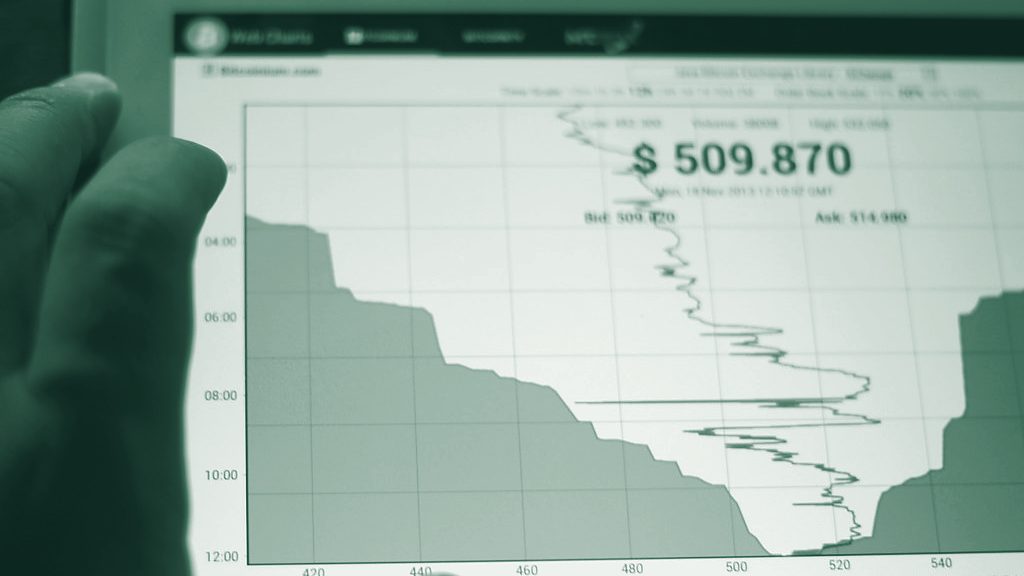
An order book is the visible list of bids and offers for an asset, each carrying a price and a quantity2. Incoming orders are matched under price-time priority: the best price first, then the earliest order at that price2. A wider gap between the best bid and best ask signals more uncertainty about the price2.
Everything in that list is an intention, not a trade, and traders read it to decide what to do. That is why regulators care about it. If quotes can be placed to mislead, or if the operator can see and act on customer orders, the book stops being a fair meeting point. Our liquidity and slippage explainer covers the mechanics of filling an order.
Order-book features and the legal question each one raises
| Feature | What it does | Legal question |
|---|---|---|
| Displayed bids and offers | Shows price and size waiting to trade2 | Are the quotes genuine intentions to trade? |
| Price-time priority | Decides who trades first2 | Does the venue apply its rule equally to everyone? |
| Bid-ask spread | Reflects price uncertainty2 | Can a thin book be pushed to move a reference price? |
| Venue operator | Runs the matching engine | Does the operator also trade on its own book?4 |
Who has authority over a crypto order book in the US?
The answer depends on what is being traded. The CFTC first treated bitcoin and other virtual currencies as commodities in 20155. Its authority is triggered when they are used in a derivatives contract, or when there is fraud or manipulation involving a virtual currency traded in interstate commerce5. Beyond those cases, the CFTC generally does not oversee spot crypto platforms or their trades5.
The CFTC's own customer advisory says much of the spot market is not regulated or supervised by a government agency, and that platforms may lack systemic and customer protections6. For tokens that are securities, the SEC is the relevant regulator, yet in 2023 it warned that none of the major crypto asset entities was registered with it as a broker-dealer, exchange or investment adviser3.
That picture began to change in December 2025, when listed spot crypto products started trading on CFTC-registered futures exchanges for the first time7. On those venues the order book sits inside a regulated exchange's rulebook. On many offshore and unregistered platforms it does not. Our SEC vs CFTC explainer sets out how the two agencies split the field.
What does a manipulation case look like?
A 2023 civil complaint from the CFTC shows how a thin order book can be turned into a weapon. These are the agency's allegations, not findings by a court. The complaint says a trader opened a large leveraged swap position on the Mango Markets platform tied to the MNGO token, then bought MNGO on three exchanges whose prices fed the oracle that Mango Markets used to value positions8.
According to the CFTC, the oracle price of MNGO rose more than 13 times in about 30 minutes, inflating the position's value for a short time, and more than $110 million in digital assets was taken8. The CFTC framed the conduct as a manipulative and deceptive scheme8.
Figure · The alleged sequence in the 2023 CFTC complaint
- 01Leveraged positionswaps tied to MNGO
- 02Buy on 3 venuesthin order books
- 03Oracle price jumpsover 13x in ~30 min
- 04Position re-valuedused to take assets
Why do conflicts inside a crypto exchange matter?
The Financial Stability Board looked at crypto firms that bundle many services around a trading platform, FTX before its collapse being one example. Such groups may trade for their own account, make markets on their own venue, lend and borrow crypto and issue their own tokens4. In traditional finance, the FSB notes, these functions are usually kept in separate entities or restricted to avoid conflicts of interest4.
For someone placing an order, the concern is simple: if the operator of the order book is also a trader on it, the queue you see may not be the whole story. The SEC has warned that unregistered crypto platforms may lack important investor protections3, which leaves much of the answer to each platform's own terms.
What mistakes do traders make about order-book protection?
Common beginner mistakes
Assuming every exchange is a regulated exchange
In 2023 none of the major crypto firms was registered with the SEC as an exchange3. Check the venue on the regulator's register.
Treating displayed depth as guaranteed
Quotes on the book are intentions that can disappear; the price you get depends on what is resting when your order arrives1.
Thinking no regulator can act on spot crypto
The CFTC can bring fraud and manipulation cases involving spot crypto commodities5.
Ignoring who runs the book
A venue that also trades on its own platform raises conflicts that traditional markets usually separate4.
Use our guide on checking a regulated firm before you deposit. For how leveraged traders read swing points and where liquidations tend to cluster, read more on Coinlytic: market structure for perp traders.
Frequently asked questions
Does the SEC regulate crypto order books?
Only where the tokens are securities and the venue falls under its rules. In 2023 it said none of the major crypto firms was registered with it as an exchange3.
Can the CFTC act if a crypto spot price is manipulated?
Yes. Its authority covers fraud and manipulation involving virtual currencies traded in interstate commerce, even though it generally does not supervise spot platforms5.
Is a market order protected against a manipulated book?
No rule guarantees your fill price. A market order generally fills near the best opposing quote, and the last traded price may not be what you get1.
Are there regulated venues for spot crypto in the US?
Since December 2025, listed spot crypto products have traded on CFTC-registered futures exchanges7.
The bottom line
An order book is only as fair as the rules and the referee behind it. In the US, the CFTC can pursue manipulation of crypto commodities even on venues it does not supervise, the SEC covers tokens that are securities, and many platforms have sat outside both registration regimes. Before trusting the numbers on a book, find out who runs the venue, whether it also trades on it and which regulator, if any, can step in. Our how crypto markets work page gives the wider picture.
Sources
- Types of Orders — Investor.gov, U.S. Securities and Exchange Commission Primary source
- Effects of Limit Order Book Information Level on Market Stability Metrics (OFR Working Paper 14-09) — Office of Financial Research, U.S. Department of the Treasury, 2014 Primary source
- Exercise Caution with Crypto Asset Securities: Investor Alert — Investor.gov, U.S. Securities and Exchange Commission, 2023 Primary source
- The Financial Stability Implications of Multifunction Crypto-asset Intermediaries — Financial Stability Board, 2023 Primary source
- A CFTC Primer on Virtual Currencies — LabCFTC, U.S. Commodity Futures Trading Commission, 2017 Primary source
- Customer Advisory: Understand the Risks of Virtual Currency Trading — U.S. Commodity Futures Trading Commission Primary source
- Acting Chairman Pham Announces First-Ever Listed Spot Crypto Trading on U.S. Regulated Exchanges (Release 9145-25) — U.S. Commodity Futures Trading Commission, 2025 Primary source
- CFTC Charges Avraham Eisenberg with Manipulative and Deceptive Scheme to Misappropriate Over $110 million from Mango Markets (Release 8647-23) — U.S. Commodity Futures Trading Commission, 2023 Primary source
How we checked this page: every figure above links to the numbered source it came from. Spotted an error? Tell the desk — see our editorial policy.
Read next