What is inflation, and why does it shrink the value of your money?
Inflation is the slow rise in the general price level that makes each dollar, euro or pound buy a little less every year. Understanding how it is measured makes headlines, savings rates and central bank decisions much easier to read.
Education only, not investment, tax or legal advice. Crypto-assets are high-risk — risk disclosure.
The short answer
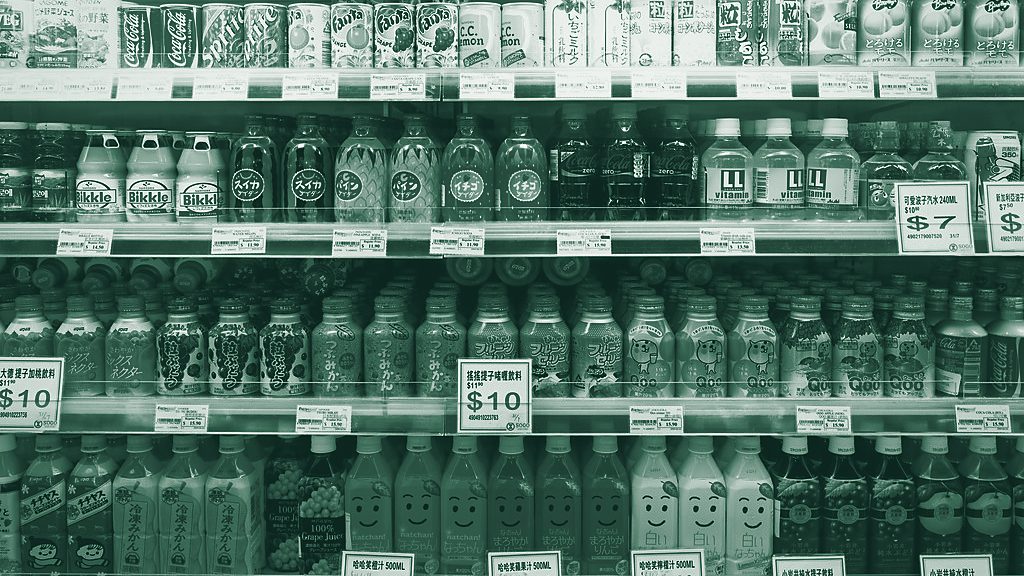
Inflation is a broad, sustained rise in the prices of goods and services. As prices rise, each unit of money buys less, so its purchasing power falls. It is usually reported as the percentage change in a price index, such as the US Consumer Price Index, over twelve months.
Key takeaways
- Inflation measures how fast the general price level rises; it is not the price of any single product.
- In the US, the CPI tracks prices paid by consumers, while the Federal Reserve targets 2% inflation on a different index, PCE.
- Economists group causes into demand pulling prices up, costs pushing them up, and expectations that keep the process going.
- Inflation helps borrowers on fixed rates and hurts savers and anyone whose income does not keep up.
What does inflation actually mean?
The Federal Reserve defines inflation simply as the increase in the prices of goods and services over time1. The European Central Bank puts it from the other side: when there is inflation, one euro buys less today than it did yesterday, so the currency loses value5.
Two ideas are easy to mix up. The price level is how expensive things are now. The inflation rate is how fast that level is rising, usually expressed as a percentage change over twelve months. When inflation "falls" from 6% to 3%, prices are still rising, just more slowly.
Illustrative: what $100 buys after 10 years of steady inflation (calculated in code)
| Annual inflation | Cost of a $100 basket after 10 years | What $100 buys, in today's money |
|---|---|---|
| 2% | $121.90 | $82.03 |
| 3% | $134.39 | $74.41 |
| 5% | $162.89 | $61.39 |
Our inflation calculator runs the same arithmetic for any amount, rate and period.
How is inflation measured?
Statisticians cannot track every price, so they follow a representative "basket". In the US, the Bureau of Labor Statistics (BLS) publishes the Consumer Price Index (CPI), which measures the average change over time in prices paid by consumers for a basket of goods and services2. BLS records the prices of about 80,000 items each month, and the main index, CPI-U, covers more than 90% of the US population2.
The index itself is just a number compared with a base period; most CPI series use 1982-84 = 1002. The inflation rate is the percentage change in that number. If an index moves from 300 to 309 over a year, inflation is 9 ÷ 300 = 3% (illustrative numbers).
Three price indexes you will see in the news
| Index | Area | Used for |
|---|---|---|
| CPI (Consumer Price Index) | United States | Headline US inflation figure, published monthly by BLS2 |
| PCE price index | United States | Published monthly by the Bureau of Economic Analysis (BEA)8; the measure behind the Fed's 2% target1 |
| HICP | Euro area | Compiled by Eurostat with national statistical offices9; the ECB's measure, a basket of about 700 goods and services5 |
You will also hear about core inflation. Core measures leave out food and energy because their prices swing sharply, which can hide the underlying trend1. BLS publishes this as "all items less food and energy"2.
What causes inflation?
An IMF primer groups the causes into three families6. Demand-pull inflation happens when spending rises faster than the economy can produce. Cost-push inflation follows supply shocks, such as natural disasters or expensive oil, that raise production costs. And expectations keep the process going: if people and firms expect higher prices, they build that into wage talks and contract prices.
Figure · How expectations can keep inflation going
- 01Prices risehouseholds notice
- 02Expectationsmore rises assumed
- 03Wages and contractsset higher to keep up
- 04Costs risefirms raise prices
↻ then back to step 01
Real episodes usually mix several causes. In the twelve months to June 2022, US consumer prices rose 9.1%, the largest twelve-month increase since the period ending November 1981. Energy prices were up 41.6% and food 10.4%, while core prices rose 5.9%3. The gap between the headline and core figures reflects how much faster energy and food prices rose than everything else.
What central banks do when inflation runs too high is covered in our explainer on how interest rates work, and how banks create money explains where new money comes from.
Why do central banks aim for 2% instead of zero?
The Federal Reserve's policy committee put a 2% goal in writing in January 2012, in its statement of longer-run goals10. It judges that 2% annual inflation, measured by the PCE index, is most consistent with its mandate of maximum employment and price stability4. The ECB has a similar goal: inflation that is low, stable and predictable at 2% over the medium term5. The Fed stresses that inflation that is steady and expected helps households and businesses make sound decisions about saving, borrowing and investing4.
Falling prices, or deflation, carry their own problem. The IMF primer notes that when prices are falling, consumers delay purchases if they can, expecting lower prices later6. At the other extreme, the same primer cites Zimbabwe in 2008, where estimated annual inflation at one point reached 500 billion percent6.
Many central banks now make low, stable inflation their main objective, an approach known as inflation targeting6.
Who wins and who loses when prices rise?
Inflation moves purchasing power between groups. The IMF gives two examples6. A borrower paying a fixed 5% mortgage rate while inflation runs at 5% pays a real interest rate of zero, so the debt gets lighter in real terms. A pensioner whose pension rises a fixed 5% a year loses purchasing power whenever inflation is higher than 5%.
Who tends to gain or lose when inflation is higher than expected
| Position | Tends to | Why |
|---|---|---|
| Borrower on a fixed rate | Gain | Repays with money that buys less than when it was borrowed |
| Saver earning a low fixed rate | Lose | Interest may not keep up with rising prices |
| Person on a fixed income | Lose | The same payment covers fewer goods each year |
| Worker whose pay rises faster than prices | Hold or gain | Real income keeps pace or improves |
Worked example
Nominal versus real returns
Keep $1,000 in an account paying 1% a year for 10 years and the balance grows to about $1,104.62. If prices rise 3% a year over the same decade, that balance buys only what about $821.94 buys today. The account grew, but its purchasing power fell by roughly 18%. Illustrative rates; figures calculated in code.
This is why savers look at the real return: the rate earned minus inflation. Our guide to compound interest shows how both the rate and inflation compound over time.
What mistakes do people make when thinking about inflation?
Common beginner mistakes
Thinking lower inflation means lower prices
A drop from 6% to 3% means prices are rising more slowly. Prices only fall during deflation.
Treating your own basket as the index
The ECB notes people often feel inflation is higher than official figures because they notice frequent purchases like groceries most5. Your personal rate depends on what you buy.
Looking only at nominal returns
A savings rate below inflation shrinks your purchasing power even though the balance grows.
Assuming a dollar stablecoin escapes inflation
A token designed to stay at one dollar keeps the dollar's purchasing power, which inflation erodes. See our stablecoins explainer.
Treating any asset as a guaranteed hedge
Claims that a particular asset always beats inflation deserve scepticism. Prices of risky assets can fall at the same time as consumer prices rise.
Risk warning
Crypto-assets are not a safe store against inflation by default
EU financial supervisors have warned that many crypto-assets are highly risky and speculative, that their prices can rise and fall quickly over short periods, and that you may lose all the money you invest7. Read our risk disclosure before acting on anything here.
Frequently asked questions
What is the difference between CPI and core CPI?
Headline CPI covers the whole basket. Core CPI, published by BLS as all items less food and energy, removes the two most volatile categories so the underlying trend is easier to see2.
Why does the Fed use PCE rather than CPI for its target?
The Fed's committee states its 2% goal in terms of the PCE price index, while also tracking consumer and producer price indexes1.
Is some inflation good?
What is hyperinflation?
Hyperinflation is extremely rapid inflation that destroys a currency's value. The IMF cites Zimbabwe in 2008, where estimated annual inflation at one point reached 500 billion percent6.
How do I adjust an old price for inflation?
Multiply the old price by the ratio of the price index today to the index in the old year. For quick estimates with a steady assumed rate, use our inflation calculator.
The bottom line
Inflation is the rate at which the general price level rises, and it steadily reduces what money can buy. In the US it is tracked monthly through the CPI, while the Federal Reserve aims for 2% on the PCE index; the ECB has a similar 2% goal. Inflation favours fixed-rate borrowers and hurts savers and fixed incomes, so the number that matters for your savings is the real return: what you earn after prices have risen.
Sources
- What is inflation, and how does the Federal Reserve evaluate changes in the rate of inflation? — Board of Governors of the Federal Reserve System, 2025 Primary source
- Consumer Price Index: Frequently Asked Questions — U.S. Bureau of Labor Statistics Primary source
- Consumer prices up 9.1 percent over the year ended June 2022, largest increase in 40 years — U.S. Bureau of Labor Statistics, The Economics Daily, 2022 Primary source
- Why does the Federal Reserve aim for inflation of 2 percent over the longer run? — Board of Governors of the Federal Reserve System, 2025 Primary source
- What is inflation? — European Central Bank, 2025 Primary source
- Inflation: Prices on the Rise (Finance & Development, Back to Basics) — International Monetary Fund, 2019 Primary source
- EU financial regulators warn consumers on the risks of crypto-assets — EBA, ESMA and EIOPA (European Supervisory Authorities), 2022 Primary source
- Personal Consumption Expenditures Price Index — U.S. Bureau of Economic Analysis Primary source
- Measuring inflation and consumer prices (HICP) — European Central Bank Primary source
- Federal Reserve issues FOMC statement of longer-run goals and policy strategy — Board of Governors of the Federal Reserve System, 2012 Primary source
How we checked this page: every figure above links to the numbered source it came from. Spotted an error? Tell the desk — see our editorial policy.
Read next
 Tools · CalculatorInflation calculator: what will today's money be worth in the future?Pick an amount, an inflation rate you think is plausible and a number of years to see how the same basket could cost more and the same dollars buy less.
 Finance · ExplainerHow do interest rates work, and who decides them?An interest rate is the price of money over time. Central banks set one key rate, and almost every loan, savings account and bond price you see moves in its shadow.
 Finance · ExplainerWhat is compound interest, and why does time matter so much?Compound interest is interest that earns interest of its own. The idea fits in one sentence, but its effect over decades surprises almost everyone who runs the numbers for the first time.
 Finance · ExplainerHow do banks create money when they make a loan?Most of the money in your account was never printed. It was typed into existence by a bank when someone borrowed. Here is how that works, and what keeps it in check.
 Finance · ExplainerWhat is a stablecoin, and how does it stay at one dollar?Stablecoins are crypto tokens built to stay boring: one token, one dollar. Whether they manage it depends on what backs them, who can redeem them and what the law requires.
 Markets · ExplainerWhat is volatility, and why do crypto prices swing so much?Volatility is the size and speed of price swings. Crypto-assets have been far more volatile than most traditional assets, and understanding the numbers helps you judge what a sharp move really means for your money.