How do card payments work, from tap to settlement?
A card payment feels instant, but it is really a short conversation between several companies, followed by a slower exchange of money behind the scenes. Here is who is involved, what each one does and who pays for it.
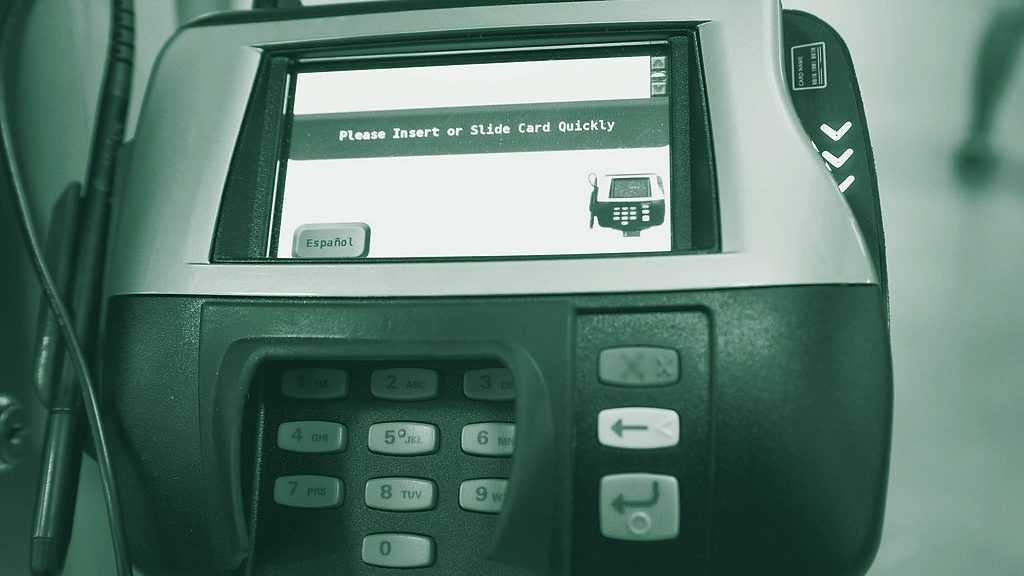
The short answer
When you pay by card, the shop's bank (the acquirer) sends the request through a card network to your bank (the issuer), which approves or declines it in seconds. The money moves later, during clearing and settlement, and the issuer receives an interchange fee from the acquirer's side.
Key takeaways
- Most card payments run on a four-party model: the cardholder's bank (issuer) and the merchant's bank (acquirer) connected by a card network1.
- Approval happens in seconds; clearing and settlement, when money actually moves between banks, can follow up to a couple of days later2.
- Interchange is a fee paid on each transaction between the acquirer and the issuer, funded from the merchant's side of the deal13.
- Some places cap interchange: the EU at 0.2% for consumer debit and 0.3% for consumer credit cards1, and the U.S. for debit cards from large issuers3.
- Debit and credit cards carry different protections if your card is lost or stolen, so report problems fast8.
Who is involved when you pay by card?
A card payment looks like a deal between you and a shop, but at least three other organisations are part of it. EU law describes the common set-up as a four-party payment card scheme: money moves from the payer's account to the payee's account through the card scheme, an issuer on the payer's side and an acquirer on the payee's side1.
The five roles in a typical card payment
| Role | Who it is | What it does |
|---|---|---|
| Cardholder | You, the customer | Presents a card, phone or card number to pay |
| Merchant | The shop or website | Accepts the card and asks for payment |
| Acquirer | The merchant's bank or payment provider | Signs up merchants and sends their transactions into the network |
| Card network | The scheme whose logo is on the card | Sets the rules, routes messages and coordinates settlement |
| Issuer | The bank that gave you the card | Approves or declines, then debits your account or credit line |
A Federal Reserve Bank of Philadelphia tutorial on card clearing describes issuers as the banks that service cardholder accounts and acquirers as the banks that provide services to merchants, with the network exchanging information between them2. Some card brands use a three-party model instead, where the scheme itself does the issuing and the acquiring1.
What happens in the seconds after you tap your card?
The first stage is authorization: a request for permission. The terminal sends the card details and amount to the acquirer, which passes them to the network, which routes them to your issuer. The issuer checks the card and your available balance or credit, then sends back an approval or a decline along the same path2.
Figure · The authorization request
- 01Merchantterminal sends request
- 02Acquirerforwards to network
- 03Networkroutes to issuer
- 04Issuerapproves or declines
An approval is a promise, not a transfer. No money has moved between banks yet. That happens in the next two stages, which the Philadelphia Fed tutorial describes in detail2.
From approval to money in the merchant's account
- 1
Authorization
At the time of purchase, the issuer approves or declines the request sent through the network2.
- 2
Clearing
Transaction details are exchanged and checked between the banks. For signature-style (dual-message) transactions this usually happens within a day; for PIN-based single-message transactions it happens at the time of purchase2.
- 3
Settlement
Money moves between the banks, usually within two days for dual-message transactions. The network nets each bank's credits and debits and moves one lump sum per bank2.
- 4
Funding the merchant
The acquirer credits the merchant's account, minus its fees, on the schedule set in the merchant's contract.
Who pays for a card payment, and what is interchange?
Shoppers often see no separate fee for paying by card. The cost sits on the merchant's side. A central piece is interchange, which EU law defines as a fee paid for each transaction, directly or through a third party, between the issuer and the acquirer1. In the U.S., the Federal Reserve describes the debit card version as a fee set by the network and paid by the merchant or acquirer to compensate the issuer for its role3.
During settlement, interchange on a purchase is collected from the acquiring bank and credited to the issuing bank; on a refund it flows the other way. Rates vary with the type of card, the kind of merchant, the type of transaction, the sales channel and fraud rates2. The acquirer then charges the merchant for its service, which is why card acceptance costs merchants more than the interchange alone.
Interchange rules in two major markets
| Market and card | Rule | Example on a purchase of 50 (euros or dollars) |
|---|---|---|
| EU, consumer debit | Capped at 0.2% of value1 | €0.10 |
| EU, consumer credit | Capped at 0.3% of value1 | €0.15 |
| U.S. debit, issuers with $10bn+ assets | 21¢ + 0.05% of value, +1¢ fraud-prevention adjustment3 | $0.245 (24.5¢) |
| U.S. debit, smaller issuers | Exempt from the cap3 | Set by the network |
Worked example
Working out the U.S. debit cap on a $50 purchase
Base fee 21¢ + (0.05% × $50 = 2.5¢) + fraud-prevention adjustment 1¢ = 24.5¢. The Federal Reserve gives the same 24.5¢ figure for a $50 transaction in its 2023 proposal, which sought to lower it to 17.7¢4. In 2024, the average interchange fee on capped U.S. debit transactions was $0.23, or 0.47% of the average transaction, against $0.51, or 1.21%, on exempt transactions5.
The U.S. cap comes from Regulation II, which applies to debit card issuers that, together with their affiliates, hold $10 billion or more in assets; covered issuers have had to comply since October 1, 20113. It does not cover credit cards. The same rule requires every debit card to work on at least two unaffiliated networks, giving merchants more than one route3.
How much do people actually pay by card?
Cards are the workhorse of everyday payments in the U.S. The Federal Reserve Payments Study counted 187.7 billion card payments worth $11.50 trillion in 20246. In its July 2026 release, the Fed said cards again accounted for over three quarters of noncash payments by number, and that debit cards were still the majority of card payments even though credit card use grew faster for the first time in almost a decade7.
Figure · U.S. card payments by number, 2024 (billions)
Online checkouts and phone wallets linked to a card still rely on these roles. Our explainer on digital wallets covers what changes when you pay with a phone, and our guide to real-time payments covers a different route that skips the card networks entirely.
Is a debit card or a credit card safer if something goes wrong?
Both can run on the same card networks, but the money comes from different places. A debit card draws on your own bank account. A credit card draws on a line of credit that you repay later. That difference shows up when a card is lost or stolen.
According to the Federal Trade Commission, the most you might owe for misuse of a lost credit card is $508. For an ATM or debit card the cap depends on speed: $50 if you report within two business days of noticing, up to $500 within 60 calendar days of your statement being sent, and possibly all the money taken after that8.
Risk warning
Report a lost card the same day
With a debit card, the money that disappears is your own, and the protection shrinks with every day you wait. Check statements and app alerts often, and contact your issuer immediately if you see a payment you do not recognise. Rules differ outside the U.S., so check your own bank's terms.
What mistakes do beginners make about card payments?
Common beginner mistakes
Thinking the network is your bank
The logo on the card is the network. Your contract, balance and disputes are with the issuer named on the card or statement.
Treating an approval as final
Approval is a yes from the issuer, not the transfer itself. Money moves between banks later, during clearing and settlement2.
Assuming card payments are free
You may not see a fee, but interchange is paid on the merchant's side of every transaction3, on top of the acquirer's own charges.
Waiting to report a lost debit card
U.S. debit card liability grows from $50 to $500 or more the longer you wait8.
Frequently asked questions
What is the difference between an issuer and an acquirer?
The issuer is the bank that gives the card to the customer and approves payments. The acquirer is the bank or provider that signs up the merchant and sends its card transactions into the network2.
Why does a payment sometimes show as pending?
Pending means the issuer has authorized the payment but it has not yet cleared and settled. Clearing and settlement can take up to a couple of days for some transaction types2.
Who decides whether my card is declined?
Your issuer makes the decision during authorization, after the network has checked the card's security features2. Your available balance or credit limit also plays a part.
The bottom line
A card payment is a fast approval followed by slower bookkeeping. The issuer approves, the network routes, the acquirer collects for the merchant, and interchange pays the issuer for its part. Knowing who does what helps you read a pending charge, choose between debit and credit, and know whom to call when something goes wrong.
Sources
- Regulation (EU) 2015/751 on interchange fees for card-based payment transactions — EUR-Lex, European Union, 2015 Primary source
- Clearing and Settlement of Interbank Card Transactions: A MasterCard Tutorial for Federal Reserve Payments Analysts (Herbst-Murphy) — Federal Reserve Bank of Philadelphia, Payment Cards Center, 2013 Primary source
- Regulation II: Debit Card Interchange Fees and Routing (compliance guide) — Board of Governors of the Federal Reserve System Primary source
- Federal Reserve Board requests comment on a proposal to lower the maximum interchange fee that a large debit card issuer can receive — Board of Governors of the Federal Reserve System, 2023 Primary source
- Regulation II: Average Debit Card Interchange Fee by Payment Card Network — Board of Governors of the Federal Reserve System, 2024 Primary source
- Federal Reserve Payments Study: National Payment Volumes, Top-Line Data (CY 2015-24) — Board of Governors of the Federal Reserve System, 2026 Primary source
- Federal Reserve issues initial findings from its 2025 triennial payments study — Board of Governors of the Federal Reserve System, 2026 Primary source
- Lost or Stolen Credit, ATM, and Debit Cards — Federal Trade Commission, Consumer Advice Primary source
How we checked this page: every figure above links to the numbered source it came from. Spotted an error? Tell the desk — see our editorial policy.
Read next
 Fintech · ExplainerWhat are real-time payments, and how do they move money in seconds?In a growing number of countries, money can leave one bank account and be usable in another a few seconds later, at any hour. Here is how these systems work, where they came from and why an instant payment needs extra care.
 Fintech · ExplainerWhat is a digital wallet, and is your money safe in one?Your phone can stand in for a card, a bank account and a cash envelope. What happens behind the tap, and where your money actually sits, decides how protected you are.
 Fintech · ExplainerWhat is fintech, and how does it change the way money moves?Fintech is the umbrella word for the apps, software and new firms that handle money with technology. Knowing what sits behind the app on your phone tells you who is actually holding your money and which protections apply.
 Finance · ExplainerHow do banks create money when they make a loan?Most of the money in your account was never printed. It was typed into existence by a bank when someone borrowed. Here is how that works, and what keeps it in check.
 Fintech · ExplainerWhat is buy now, pay later, and what does it really cost?Splitting a purchase into four payments feels like a payment option, not a loan. It is a loan, and knowing how it is built helps you use it without surprises.