What is the CFTC, and where does it fit in crypto?
The CFTC oversees U.S. futures, options and swaps, and since 2015 it has treated bitcoin as a commodity. Here is what it covers, what it does not, and how to use its public tools.
Education only, not investment, tax or legal advice. Crypto-assets are high-risk — risk disclosure.
The short answer
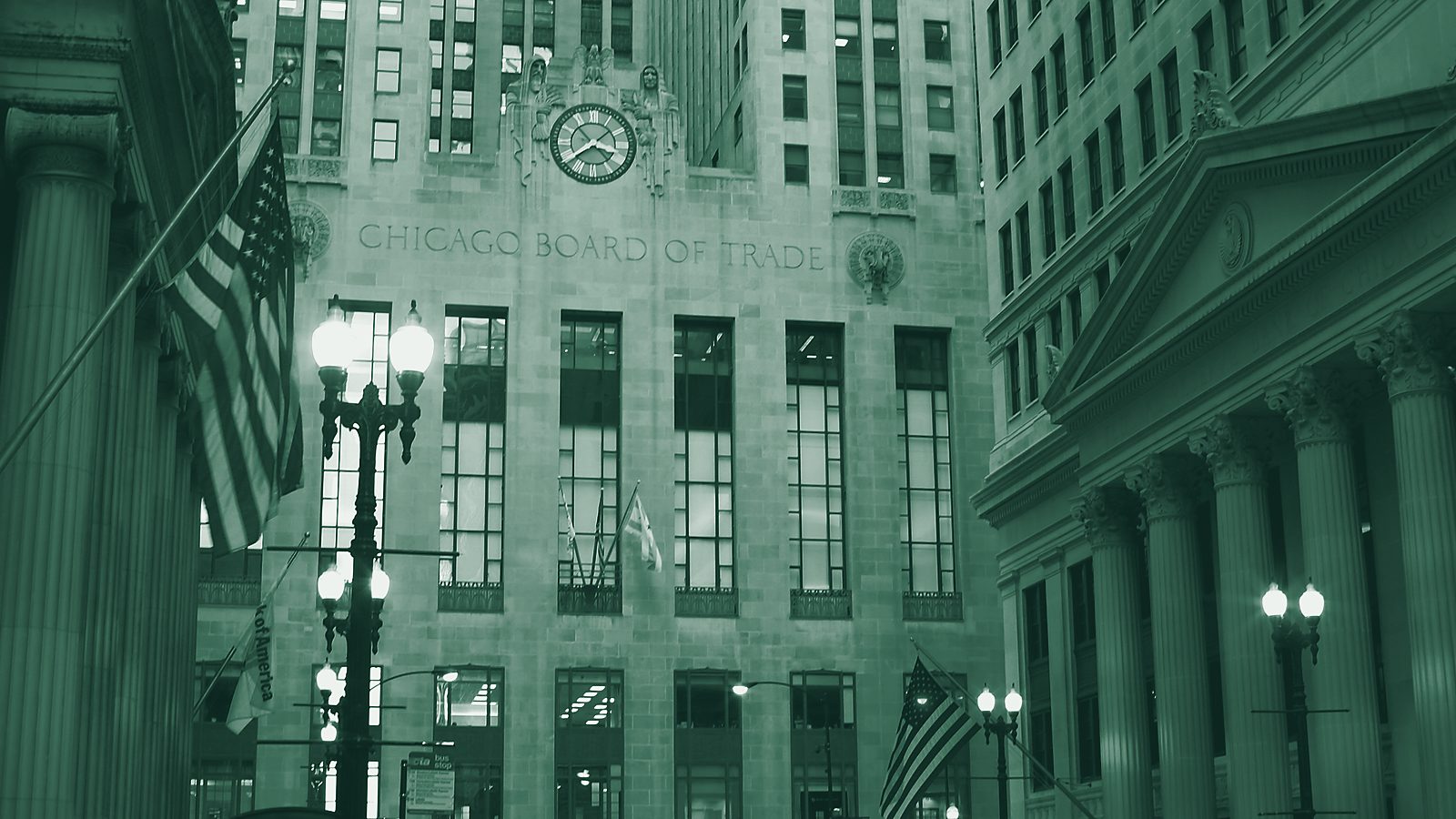
The CFTC is the U.S. federal agency that regulates derivatives markets: futures, options and swaps. Congress created it in 1974. It first found bitcoin and other virtual currencies to be commodities in 2015, so it oversees crypto derivatives and can pursue fraud in crypto spot markets.
Key takeaways
- The CFTC was created in 1974 by the Commodity Futures Trading Commission Act, when most futures were agricultural.
- It oversees futures, options and swaps; beyond fraud or manipulation, it has generally not overseen unleveraged crypto spot trading.
- In 2015 it found for the first time that bitcoin and other virtual currencies are commodities.
- Before dealing with a futures firm, check NFA BASIC and the CFTC's RED list of unregistered foreign firms.
- Tips go to the CFTC through cftc.gov/complaint or 866-FON-CFTC; customer disputes with futures professionals can go to its reparations program.
What is the CFTC and where did it come from?
The Commodity Futures Trading Commission (CFTC) is the U.S. federal agency that regulates derivatives: contracts whose value depends on something else, such as wheat, oil, interest rates or bitcoin. Its stated mission is to promote the integrity, resilience and vibrancy of U.S. derivatives markets through sound regulation1.
Its roots are in farming. Agricultural futures have traded in the United States for more than 150 years and have been under federal rules since the 1920s1. The CFTC itself was created in 1974, when Congress passed the Commodity Futures Trading Commission Act; at that time most futures trading was still agricultural1. Today it covers a much wider and more complex set of markets.
Figure · Key dates for the CFTC
- 1974CFTC created
- Sep 2015Bitcoin ruled a commodity
- Dec 2025Listed spot crypto begins
- Mar 2026Joint guidance
What are futures, options and swaps?
The CFTC's core territory is futures, options and swaps4. All three are agreements about a future price rather than a simple purchase today. They let farmers, airlines and banks manage risk, and they also let traders bet on price moves, often with borrowed money.
The three main contract types the CFTC oversees, in plain words
| Contract | What it is | Everyday example |
|---|---|---|
| Future | An agreement to buy or sell an asset at a set price on a set date | A bakery locks in next year's wheat price |
| Option | The right, but not the duty, to buy or sell at a set price | Paying a fee to cap what you might pay later |
| Swap | Two parties exchange payment streams, such as fixed for floating interest | A company swaps a variable loan rate for a fixed one |
Our explainers on spot vs derivatives and perpetual futures cover how these contracts behave in crypto markets.
Who runs the CFTC?
Like the SEC, the CFTC is led by a bipartisan commission rather than a single director.
How the CFTC's commission is built Source: [2]
| Feature | Rule |
|---|---|
| Number of commissioners | Five |
| Who appoints them | The President, with the advice and consent of the Senate |
| Term length | Staggered five-year terms |
| Party balance | No more than three from the same political party at any one time |
| Leader | A Chairman designated by the President, with Senate consent |
The CFTC's site lists Michael S. Selig as Chairman, sworn in on December 22, 20252. Membership changes over time, so check the commissioners page for the current line-up.
How does the CFTC deal with crypto, as of October 2026?
In September 2015, in an order against a bitcoin options platform, the CFTC found for the first time that bitcoin and other virtual currencies are properly defined as commodities3. That finding is the basis of its crypto role.
Its 2017 bitcoin fact sheet set out the limits. The CFTC's jurisdiction is triggered when a virtual currency is used in a derivatives contract, or when there is fraud or manipulation involving a virtual currency traded in interstate commerce. Beyond fraud or manipulation, it said it generally does not oversee spot exchanges and trades that use no margin, leverage or financing4.
Where the CFTC's crypto reach starts and stops (as described in its 2017 fact sheet) Source: [4]
| Activity | CFTC role |
|---|---|
| Crypto futures, options and swaps | Oversees directly |
| Crypto trades using margin, leverage or financing | Falls within CFTC jurisdiction |
| Plain spot buying with no leverage | Generally not overseen, except for fraud or manipulation |
| Fraud or manipulation in crypto traded across state lines | Can bring enforcement action |
That picture is shifting. On December 4, 2025, the CFTC announced that listed spot crypto products would trade on CFTC-registered futures exchanges for the first time5. On March 17, 2026, the CFTC joined an SEC interpretation of how securities laws apply to crypto assets, saying it would administer the Commodity Exchange Act consistently with it6.
Note
Read the date
Crypto rules in the U.S. changed several times in 2025 and 2026. This profile reflects official documents up to the dates cited. For how the CFTC and SEC split the work, see SEC vs CFTC in crypto and our SEC profile.
How do you check whether a futures firm is registered?
The Commodity Exchange Act requires intermediaries to register. These include futures commission merchants (FCMs), introducing brokers, commodity trading advisors, commodity pool operators, their associated persons and swap dealers8. The CFTC says most scams involve unregistered entities, people and products8.
A quick registration check
- 1
Search NFA BASIC
The CFTC points investors to the National Futures Association's BASIC database to check registration, disciplinary history and financial information8.
- 2
Check the RED list
The Registration Deficient (RED) List names foreign firms that appear to need CFTC registration but are not registered9.
- 3
Do not stop at the lists
Being absent from the RED list proves nothing; the list is not exhaustive, and inclusion is not a finding of wrongdoing9.
- 4
Match the details
Compare the firm's name, website and address with the record. Our guide on checking a regulated firm explains clone-firm tricks.
How do you report fraud or file a complaint with the CFTC?
Ways to reach the CFTC Source: [7]
| Route | Use it when | Note |
|---|---|---|
| Form TCR (whistleblower) | You have information about a violation | Anti-retaliation protection; awards up to 30% of money collected |
| Complaint form | You want to report but not join the whistleblower program | Goes to the Division of Enforcement |
| Reparations complaint | You have a dispute with a futures professional | A low-cost forum for customer claims |
| Phone 866-FON-CFTC | You prefer to talk | 866-366-2382, toll-free |
You do not need to file both forms, but only a Form TCR makes you eligible for the whistleblower program. Whistleblowers may file anonymously, as long as they give the Division of Enforcement a way to contact them7.
What mistakes do beginners make about the CFTC?
Common beginner mistakes
Thinking the CFTC licenses crypto exchanges
For plain spot trading without leverage, the CFTC has described its role as mainly pursuing fraud and manipulation4. A spot platform is not CFTC-supervised just because bitcoin is a commodity.
Confusing commodity with safe
Calling bitcoin a commodity is a legal label about who regulates its derivatives. It says nothing about price risk.
Trusting an offshore broker's claims
Firms on the RED list appear to be acting in roles that need CFTC registration without having it9. Check NFA BASIC yourself.
Using leverage without understanding it
Futures and swaps are often traded on margin, so a small price move can wipe out the deposit.
Risk warning
Leverage cuts both ways
Derivatives can lose money faster than the asset underneath them, and you can lose more than you expected. Never trade with money you cannot afford to lose. See our risk disclosure and the leverage calculator.
Frequently asked questions
Is bitcoin a commodity or a security in the U.S.?
Does the CFTC regulate crypto exchanges?
What is the National Futures Association?
It runs BASIC, the database the CFTC tells investors to use to check the registration and disciplinary history of futures firms and professionals8.
What is the CFTC reparations program?
It lets customers bring claims against futures professionals. The CFTC describes it as an inexpensive, impartial and efficient forum7.
The bottom line
The CFTC is the U.S. referee for derivatives, created in 1974 and run by a five-member commission. It has treated bitcoin as a commodity since 2015, oversees crypto futures and swaps, and acts against fraud in spot markets. Check NFA BASIC and the RED list before trusting a futures firm, and report suspected fraud at cftc.gov/complaint.
Sources
- About the Commission — U.S. Commodity Futures Trading Commission Primary source
- Chairman & Commissioners — U.S. Commodity Futures Trading Commission Primary source
- CFTC Orders Bitcoin Options Trading Platform Operator and its CEO to Cease Illegally Offering Bitcoin Options (Release 7231-15) — U.S. Commodity Futures Trading Commission, 2015 Primary source
- Bitcoin Basics (fact sheet) — U.S. Commodity Futures Trading Commission, 2017 Primary source
- Acting Chairman Pham Announces First-Ever Listed Spot Crypto Trading on U.S. Regulated Exchanges (Release 9145-25) — U.S. Commodity Futures Trading Commission, 2025 Primary source
- SEC Clarifies the Application of Federal Securities Laws to Crypto Assets (Press Release 2026-30) — U.S. Securities and Exchange Commission, 2026 Primary source
- Submit a Tip or Complaint — U.S. Commodity Futures Trading Commission Primary source
- Be Smart: Check Registration & Backgrounds Before You Trade — U.S. Commodity Futures Trading Commission Primary source
- RED (Registration Deficient) List — U.S. Commodity Futures Trading Commission Primary source
How we checked this page: every figure above links to the numbered source it came from. Spotted an error? Tell the desk — see our editorial policy.
Read next
 Policy · ExplainerSEC vs CFTC: which US regulator is in charge of crypto?For years the answer to "who regulates crypto in America?" was "it depends". In 2026 the two main market regulators published a shared map, but Congress has not yet written the split into law.
 Policy · ProfileWhat is the SEC, and what does it mean for crypto?The SEC is the federal agency that polices U.S. securities markets. Here is where its power comes from, how it treats crypto assets as of October 2026, and how to use its public tools.
 Markets · ExplainerWhat is the difference between spot and derivatives trading in crypto?Buying a coin and buying a contract on that coin's price can look identical on a trading screen. Underneath, they carry different risks, different costs and different regulators.
 Markets · ExplainerWhat are perpetual futures, and how does the funding rate work?Perpetual contracts have become a dominant form of crypto derivative, yet they never expire. A small, regular payment between buyers and sellers is what keeps their price tied to the real asset, and it can quietly add up.
 Policy · ExplainerHow do you check whether a financial or crypto firm is regulated?A licence number in a website footer proves nothing until you check it yourself. Official registers are free, public and take a few minutes. Here is which one to use and what to look for.
 Tools · CalculatorLeverage calculator: how far can the price move before your margin is gone?Enter your margin, the leverage, an entry and exit price and the direction. The calculator shows the size of the bet you are really making and how small a move can erase your money.