What is compound interest, and why does time matter so much?
Compound interest is interest that earns interest of its own. The idea fits in one sentence, but its effect over decades surprises almost everyone who runs the numbers for the first time.
Education only, not investment, tax or legal advice. Crypto-assets are high-risk — risk disclosure.

The short answer
Compound interest is interest paid on your original money and on the interest it has already earned. Because each period's interest is added to the balance, the next period's interest is calculated on a bigger number, so growth speeds up the longer the money stays put.
Key takeaways
- Simple interest is paid only on the original amount; compound interest is also paid on interest already earned.
- The longer money compounds, the larger the share of the final balance that comes from interest rather than deposits.
- More frequent compounding raises the effective yield slightly; US Truth in Savings rules capture this in a figure called the APY.
- Compounding works on debts too, and inflation quietly shrinks what a compounded balance can buy.
What is compound interest, in plain terms?
When you lend money to a bank by depositing it, or lend to a borrower by buying a bond, you are paid interest: a fee for the use of your money, usually quoted as a yearly percentage of the amount. The amount you start with is called the principal.
With simple interest, the fee is always worked out on the original principal. With compound interest, it is worked out on the principal plus any interest already credited. The SEC's investor education site sums it up as interest paid on principal and on accumulated interest1.
Its classroom example uses $100 at 5% a year. In year one you earn $5 and finish with $105. In year two the 5% applies to $105, so you finish with $110.25. That extra 25 cents is interest earned on interest2. It looks trivial, but the same effect repeats every period and keeps growing.
Illustrative: $10,000 at 5% a year, nothing added or withdrawn (calculated in code)
| End of year | Simple interest balance | Compound interest balance (annual) | Gap |
|---|---|---|---|
| 1 | $10,500.00 | $10,500.00 | $0.00 |
| 2 | $11,000.00 | $11,025.00 | $25.00 |
| 3 | $11,500.00 | $11,576.25 | $76.25 |
| 10 | $15,000.00 | $16,288.95 | $1,288.95 |
How is compound interest calculated?
For a single deposit, the standard formula is A = P × (1 + r/n)^(n × t), where P is the principal, r the annual rate as a decimal, n the number of times interest is credited per year and t the number of years. A is the balance at the end.
Figure · The compounding loop
- 01Balanceincl. past interest
- 02Interest earnedrate × current balance
- 03Interest creditedadded to the account
- 04Bigger balancenext period starts here
↻ then back to step 01
Worked example
Working the formula
Take $10,000 at 5% for 10 years. Credited once a year: 10,000 × 1.05^10 = $16,288.95. Credited monthly: 10,000 × (1 + 0.05/12)^120 = $16,470.09. With simple interest the same deposit would reach only $15,000.00. All three figures were calculated in code.
The Investor.gov calculator asks for the same ingredients: an initial amount, an optional monthly contribution (a negative number means a withdrawal), the number of years, an estimated annual rate and how often interest compounds3. Our own compound interest calculator uses the formula above and adds monthly contributions at the end of each month.
Does it matter how often interest compounds?
Yes, but less than most people expect. More frequent crediting means interest starts earning interest sooner. The table shows the same $10,000 at a 5% annual rate over 10 years with different compounding schedules.
Illustrative: $10,000 at a 5% annual rate for 10 years (calculated in code)
| Compounding | Balance after 10 years | Interest earned |
|---|---|---|
| Annually | $16,288.95 | $6,288.95 |
| Quarterly | $16,436.19 | $6,436.19 |
| Monthly | $16,470.09 | $6,470.09 |
| Daily | $16,486.65 | $6,486.65 |
Moving from yearly to monthly compounding adds about $181 here; moving from monthly to daily adds less than $17. The rate and the time matter far more than the schedule.
Because the schedule changes what you actually earn, the US Truth in Savings rules (Regulation DD) define an annual percentage yield (APY) for deposit accounts. The APY reflects both the interest rate and how often interest compounds over a 365-day period, while the plain interest rate does not reflect compounding4. Banks must show both figures, labelled "annual percentage yield" and "interest rate", in the disclosures you receive before an account is opened6. A 5% rate compounded monthly works out to an APY of about 5.12%. Our APR to APY converter does that conversion for any rate.
Why does time matter more than anything else?
Over short periods, compound and simple interest look almost the same. Over long periods they split apart, because the interest-on-interest part keeps growing. Investor.gov notes that $100 at 5% becomes more than $162 in 10 years and nearly $340 in 25 years without any extra deposits2.
Worked example
Starting early versus saving harder later
Saver A puts in $200 a month for 30 years. Saver B waits 15 years, then puts in $400 a month for 15 years. Both deposit $72,000 in total. At an illustrative 5% a year, compounded monthly, Saver A ends with about $166,452 and Saver B with about $106,916. The difference comes entirely from the extra years of compounding. Figures calculated with the same formula as our calculator; the rate is assumed, not a forecast.
A quick way to feel this is the Rule of 72: divide 72 by the annual rate to estimate how many years it takes money to double. Investor.gov gives the example of 9%, which doubles money roughly every 8 years2. The rule is an approximation; the exact answer at 9% is about 8.04 years.
Running your own numbers
- 1
Enter what you have now
Use your current balance as the starting amount, or zero if you are starting fresh.
- 2
Add a realistic monthly amount
Pick a contribution you could keep up in a tight month, not your most optimistic figure.
- 3
Test several rates
Run a low, a middle and a high rate. A single rate hides how sensitive the result is.
- 4
Compare time horizons
Change the number of years by five or ten and watch how much of the final balance is interest.
Can compound interest work against you?
Yes. The arithmetic does not care which side of the account you are on. On any loan where unpaid interest is added to the amount owed, the balance grows the same way a savings balance does, which is why leaving a balance unpaid can be expensive. Our loan payment calculator shows how much of each payment goes to interest.
Inflation is the other quiet opponent. If prices rise 3% a year, the $16,470.09 from the monthly example above would buy about what $12,255 buys today after 10 years (illustrative, calculated in code). Growth that only matches inflation leaves your purchasing power unchanged. Our explainer on inflation covers how that is measured.
Risk warning
A projection is not a promise
Calculators assume one fixed rate for the whole period. Real savings rates move, and investments such as shares, funds or crypto-assets can fall in value. As the SEC's guide to asset allocation puts it, all investments involve some degree of risk5. Treat any compounded figure as a scenario, and be wary of anyone who quotes a high, steady yield as if it were certain.
What mistakes do beginners make with compound interest?
Common beginner mistakes
Comparing rates instead of APYs
Two accounts with the same headline rate can pay different amounts if they compound on different schedules. Compare the APY.
Assuming a high rate will last
A long projection at today's highest rate overstates the outcome if rates fall. Test lower rates too.
Ignoring fees
Money taken out of the balance as a yearly fee stops compounding for you. A small percentage fee can add up to a large sum over decades.
Interrupting the process
Withdrawing interest as it is paid turns compound growth back into simple interest.
Forgetting inflation
A balance that doubles in 20 years may buy far less than double if prices also rose.
Frequently asked questions
Is compound interest the same as APY?
No. Compound interest is the process of earning interest on interest. APY is a disclosure figure that expresses the result of that process over one year, combining the rate and the compounding schedule into a single percentage4.
Does daily compounding make a big difference compared with monthly?
Usually not. In our 10-year example on $10,000 at 5%, daily compounding added less than $17 compared with monthly compounding. The rate you earn and how long you leave the money matter much more.
How long does it take money to double?
Divide 72 by the annual rate for a rough estimate2. That gives about 24 years at 3%, 12 years at 6% and 8 years at 9%. The exact figures differ slightly (about 23.4, 11.9 and 8.04 years by our calculation), and the rule assumes the rate stays constant.
Do stocks and crypto-assets compound like a savings account?
Not in the same way. A savings account credits interest at a stated rate. Shares and crypto-assets have no fixed rate; their value can rise or fall, so a compound growth figure for them describes past or assumed returns, not a contractual payment.
What is the difference between simple and compound interest on a loan?
With simple interest you are charged only on the amount borrowed. With compound interest, unpaid interest is added to the balance and itself attracts interest, so the debt grows faster if you do not pay it down.
The bottom line
Compound interest is simple arithmetic repeated many times: interest is added to the balance and then earns interest itself. Over a few years the effect is small; over decades it can account for most of the final balance. Compare accounts by APY, test more than one rate, remember that fees and inflation compound too, and treat every long-range projection as a scenario rather than a guarantee.
Sources
- Compound Interest (glossary) — Investor.gov, U.S. Securities and Exchange Commission Primary source
- What is compound interest? — Investor.gov, U.S. Securities and Exchange Commission Primary source
- Compound Interest Calculator — Investor.gov, U.S. Securities and Exchange Commission Primary source
- Regulation DD (Truth in Savings), 12 CFR 1030.2 and Appendix A — Consumer Financial Protection Bureau Primary source
- Beginners' Guide to Asset Allocation, Diversification, and Rebalancing — Investor.gov, U.S. Securities and Exchange Commission Primary source
- Regulation DD (Truth in Savings), 12 CFR 1030.4: Account disclosures — Consumer Financial Protection Bureau Primary source
How we checked this page: every figure above links to the numbered source it came from. Spotted an error? Tell the desk — see our editorial policy.
Read next
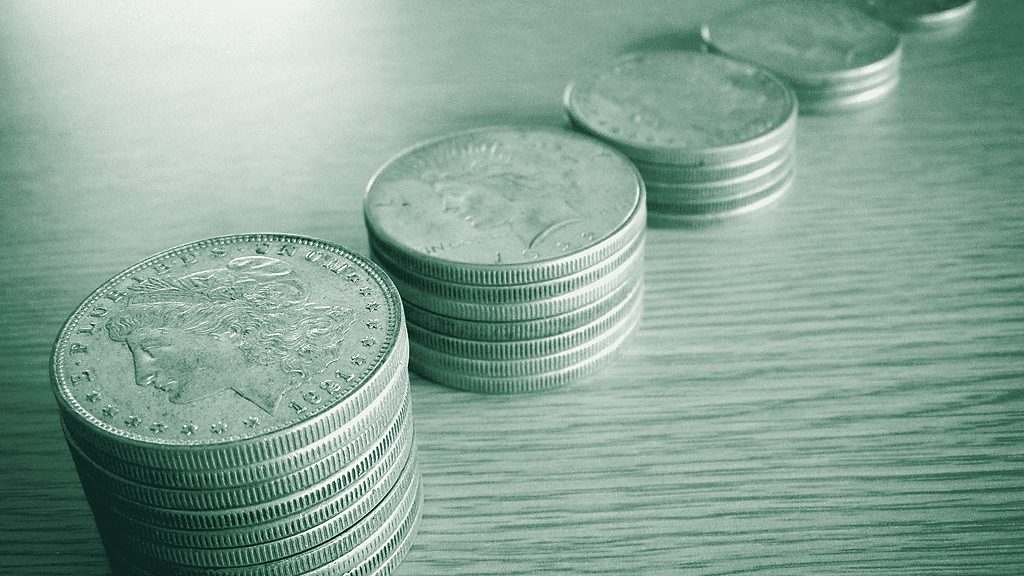 Tools · CalculatorCompound interest calculator: how much could your savings grow?Enter a starting amount, a monthly deposit, a rate and a time span to see how much of the result is your money and how much is interest earning interest.
 Tools · CalculatorAPR to APY converter: how much does compounding really add?Two accounts can quote the same rate and still pay different amounts. Enter a rate and a compounding frequency to see the real yearly yield.
 Finance · ExplainerWhat is inflation, and why does it shrink the value of your money?Inflation is the slow rise in the general price level that makes each dollar, euro or pound buy a little less every year. Understanding how it is measured makes headlines, savings rates and central bank decisions much easier to read.
 Finance · ExplainerHow do interest rates work, and who decides them?An interest rate is the price of money over time. Central banks set one key rate, and almost every loan, savings account and bond price you see moves in its shadow.
 Finance · ExplainerWhat is a money market fund, and is it as safe as a bank account?Money market funds are where many people and companies park cash they may need soon. They are built to be steady, but they are investments, not bank deposits, and that difference matters most in a crisis.
 Tools · CalculatorLoan payment calculator: what will a loan cost each month and in total?Enter the amount, the annual rate and the term to see the fixed monthly payment and how much of your money goes to interest rather than the loan itself.