News analysis ·
Stablecoins vs bank deposits: what a BIS study found
A BIS paper finds stablecoin growth slows when US banks pay more on deposits. We explain the deposit pricing mechanism and why central banks watch it.
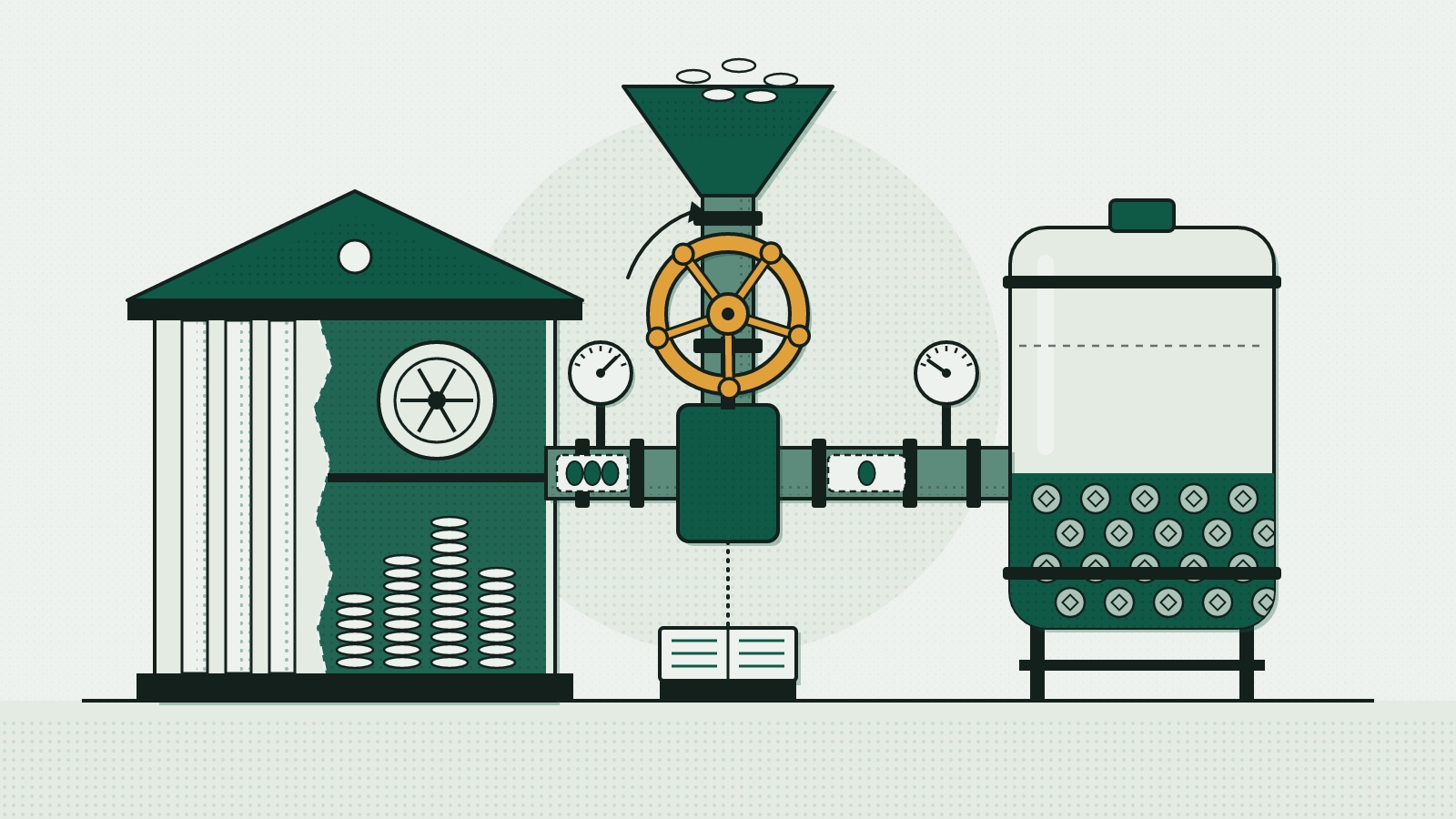
A new research paper from the BIS, the Bank for International Settlements, asks a simple question: when US banks pay more on deposits, do people hold fewer stablecoins? The answer, according to the BIS authors, is a qualified yes. This article looks at the deposit pricing mechanism behind that result and why central banks care about it.
What the BIS paper says
The paper was published on 2026-10-13 by the Monetary and Economic Department of the BIS, within its Financial Stability Policy work. The authors describe stablecoins as digital tokens built to keep a steady value, mostly against the US dollar. Like a bank account, they can be used to pay and to park cash. Unlike most bank accounts, they usually pay little or no interest.
The headline finding: deposits and stablecoins partly replace each other. When US deposit rates went up, the combined value of dollar-reserve stablecoins grew more slowly in the weeks that followed. The effect was stronger for USDC than for USDT, which the BIS authors link to USDC's closer ties to US depositors. The same pattern did not appear for crypto assets that are not stablecoins.
How this works: deposit pricing as a competing offer
Think of a dollar that a household or firm wants to keep liquid. It can sit in a bank deposit or in a stablecoin. Both promise one dollar back. The difference is what each pays for waiting. A deposit rate is a price that a bank sets. When it rises, the cost of holding a non-paying stablecoin rises too. Economists call this an opportunity cost.
The hard part is proving which way the cause runs. Rates and crypto demand can both react to the same news. The BIS authors handled this in a few steps:
- They tracked US data week by week, from January 2019 through June 2025, and compared deposit rate changes with later changes in stablecoin market capitalisation.
- They controlled for broad rate conditions, Treasury yields, currency moves, bitcoin prices, market volatility and wider crypto developments.
- They used a quirk in bank behaviour: banks reprice deposits much more strongly once the federal funds rate passes approximately 3%, while other money market rates follow it in a roughly straight line.
- They ran a placebo test on non-stablecoin crypto assets, where no effect should appear, and none did.
That quirk matters. Because banks change deposit rates in a lumpy way that the rest of the money market does not, the authors can isolate the part of the move that comes from bank pricing itself. Their instrumental variable estimates, which rely on this approach, come out roughly three times larger than the simpler ordinary least squares estimates.
Reading the size of the effect
Numbers in research papers are easy to misread, so it helps to set them side by side. The BIS authors put average stablecoin growth over a ten-week window at 15%. Against that baseline, their ordinary least squares estimates point to a reduction of about 3.75 percentage points for a one-standard-deviation move in deposit repricing. A standard deviation here simply means a typical-sized change, not an extreme one.
So the finding is not that deposits drain stablecoins overnight. It is that a normal swing in what banks pay can take a visible slice out of how fast the stablecoin sector grows. The paper also reports that the result holds across different deposit products, for stablecoins supplied to DeFi protocols, and across deposit tiers that reprice by different amounts.
What changes, and for whom
For banks, the message is that their own pricing is part of the competition. In the paper, the BIS authors conclude that the size of the stablecoin sector depends in part on how banks price deposits.
For central banks, the concern is the plumbing. Monetary policy works partly through bank funding: a central bank moves its policy rate, banks adjust what they pay and charge, and spending responds. The BIS authors note that broader use of stablecoins could change banks' funding conditions and the way monetary policy passes through to the economy. For ordinary users, the point is simpler. A stablecoin balance that pays nothing has a cost that grows when bank rates rise. Stablecoins also carry their own risks, and a holder can lose money if one fails to keep its value.
Open questions the paper leaves
The authors are careful about limits. Their study looks at how money is split between assets. It does not show that stablecoin growth must reduce total bank deposits or bank lending.
Other questions remain open. The data are from the United States only, so the result may not carry over to other countries. The reports also leave open how large the effect is outside the sample period, and whether wider stablecoin use would in practice change bank funding or the way policy passes through, which the authors raise only as a possibility.
Sources
- BIS, 13 Oct 2026
How this post was made: an AI model drafted it from the sources listed above, and software checks ran before it went live without a human edit. Every figure has to match a listed source and no sentence is copied. It explains how the mechanism works; it is not investment advice.