News analysis ·
Why Basel now scores big banks on yearly averages
The Basel Committee will score G-SIBs on yearly averages, not year-end snapshots. How window-dressing works and why averaging blunts it.
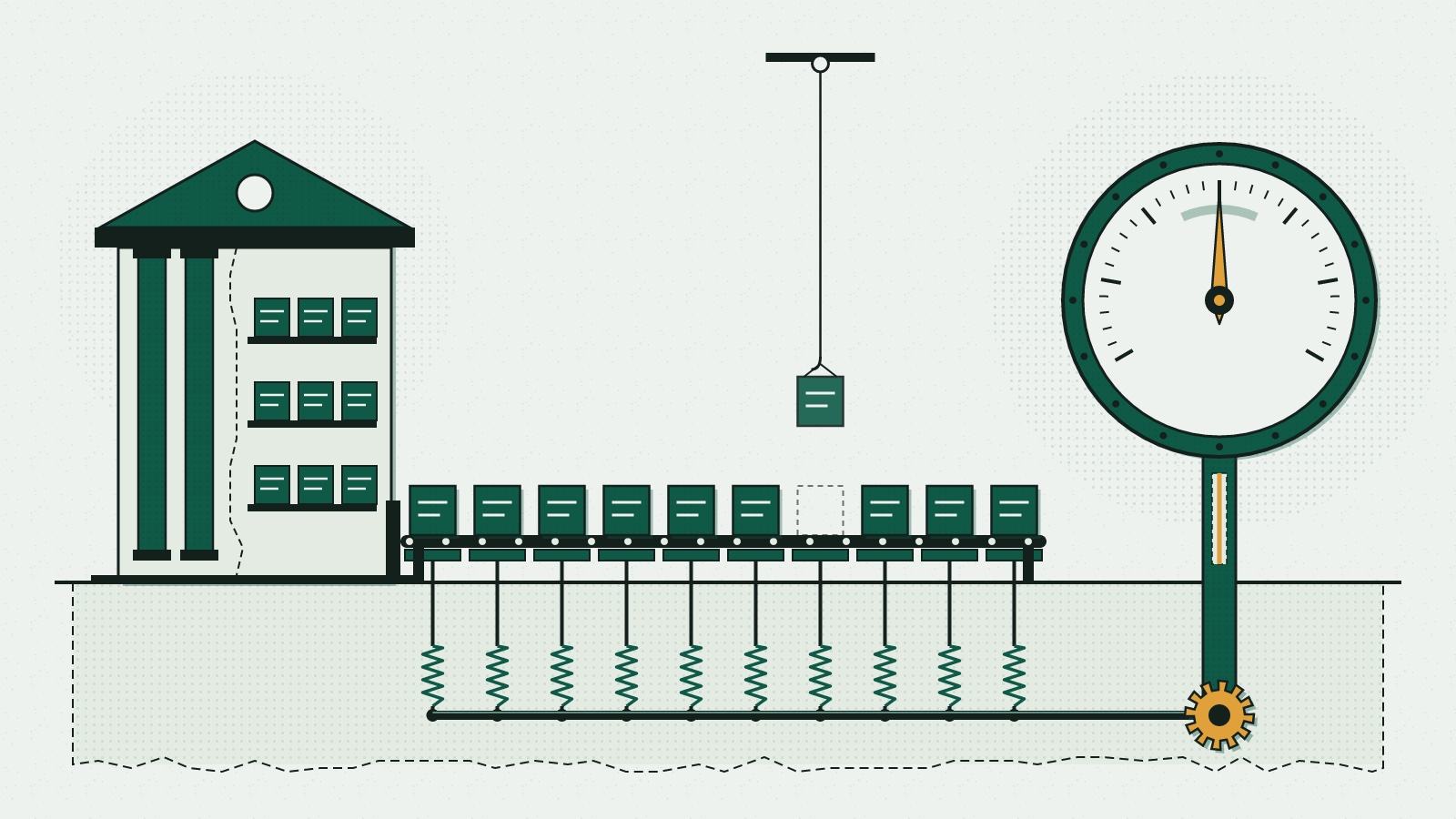
The Basel Committee on Banking Supervision has finalised a change to how the world's largest banks are measured: their size indicators will be judged on averages across the year, not on a single year-end snapshot, according to a statement published by the BIS on 2026-10-16. This article explains why a snapshot invites gaming, how averaging closes the gap, and what the other parts of the package change.
What happened
The Basel Committee on Banking Supervision released final amendments aimed at window-dressing in its framework for global systemically important banks, or G-SIBs. Window-dressing here means a bank briefly shrinking how large and interconnected it looks around the dates on which its G-SIB score is reported and made public. The Committee's position is blunt: "window-dressing by banks is unacceptable". It says the practice defeats the purpose of its standards and can disrupt the way financial markets function.
The fix is a reporting rule. Banks taking part in the G-SIB exercise must report and disclose all stock indicators as averages over the reporting year, instead of the values on its last day. The requirement takes effect by 1 January 2030. The Committee said the lead time gives banks room to build robust and comprehensive reporting processes. In the same release, it raised the size threshold for G-SIB reporting and disclosure and opened a consultation on part of its scoring method.
How the G-SIB score works, and where the gap was
A G-SIB score is a way of ranking banks by how much damage their failure could do to the wider system. A bank that looks more systemic gets more attention, so a lower score is attractive to every large bank.
Some of the inputs are stock indicators. A stock is a level measured at a point in time, like the size of a balance sheet or the amount owed to other banks, rather than a flow such as payments made over a year. If a stock is measured on one date only, a bank does not need to be smaller all year. It only needs to look smaller on that date.
- Before the reference date, a bank can trim positions that are easy to rebuild.
- On the reference date, the snapshot records the smaller balance sheet and a lower score.
- After the date, the positions come back and the bank's real footprint returns to normal.
- The score then describes a bank that existed for a few days, not the one that operated for the rest of the year.
When the indicator is the average of values across the year, a brief dip around one date barely moves the result. To lower an average, a bank has to be smaller for much of the year, which is the outcome the framework was designed to reward in the first place. The Committee's stated aim is exactly this: to limit how far banks can push their G-SIB scores down through temporary balance sheet moves.
Why the markets care, not just the supervisors
Window-dressing is not only a scoring problem. The Committee says it can disrupt how financial markets function. The reports do not spell out the channel, but the logic is simple: markets rely on large banks, so if many of them shrink their activity around the same dates, the effect can reach beyond the banks themselves.
Averaging spreads the incentive across the year, so stepping back on a single day gains a bank little.
The other changes: a higher threshold and a cross-border question
The Committee also agreed to raise the size level at which banks must take part in G-SIB reporting and disclosure. The threshold, measured by leverage ratio exposure, moves to EUR 350 billion from EUR 200 billion, and the higher level applies from 2027. Leverage ratio exposure is a broad measure of a bank's total exposures. A higher threshold narrows the reporting net; the release does not say by how much.
Separately, as part of its regular review of how G-SIBs are scored, the Committee is consulting on whether cross-border exposures inside the EBU should be treated in a specific way in the framework. Cross-border activity counts towards a bank's systemic footprint, so the question is how exposures inside that bloc should count. Stakeholders may comment on any part of the consultation until 14 January 2027.
What the release leaves open
Several practical points are not settled in the BIS statement. It does not explain how often values must be sampled to build the yearly average, which matters for how easily a bank could still smooth its numbers. It does not say how scores, or the extra requirements tied to them, are expected to shift once averages replace snapshots. And the cross-border question remains a proposal until the consultation closes and the Committee decides.
There is also the gap before 1 January 2030, during which the incentive the Committee wants to remove stays in place.
Sources
- BIS, 16 Oct 2026
How this post was made: an AI model drafted it from the sources listed above, and software checks ran before it went live without a human edit. Every figure has to match a listed source and no sentence is copied. It explains how the mechanism works; it is not investment advice.