What is a digital wallet, and is your money safe in one?
Your phone can stand in for a card, a bank account and a cash envelope. What happens behind the tap, and where your money actually sits, decides how protected you are.
The short answer
A digital wallet is an app that stores payment details so you can pay with a phone, watch or browser. Some pass payments through to your card using a substitute number called a token; others hold a balance in the app, which may lack deposit insurance.
Key takeaways
- Digital wallets come in two broad types: pass-through wallets that store card tokens, and stored-balance apps that hold money themselves.
- Tap-to-pay wallets replace your card number with an EMV payment token that is restricted to a device, merchant or type of payment.
- The tokenisation standard is managed by EMVCo, a technical body owned by six card networks and formed in 1999.
- The CFPB warned in 2023 that money kept in payment apps often lacks deposit insurance, and that insurance never covers the app company's own failure.
- A 2024 US rule to supervise large payment apps was overturned by Congress in May 2025.
What is a digital wallet?
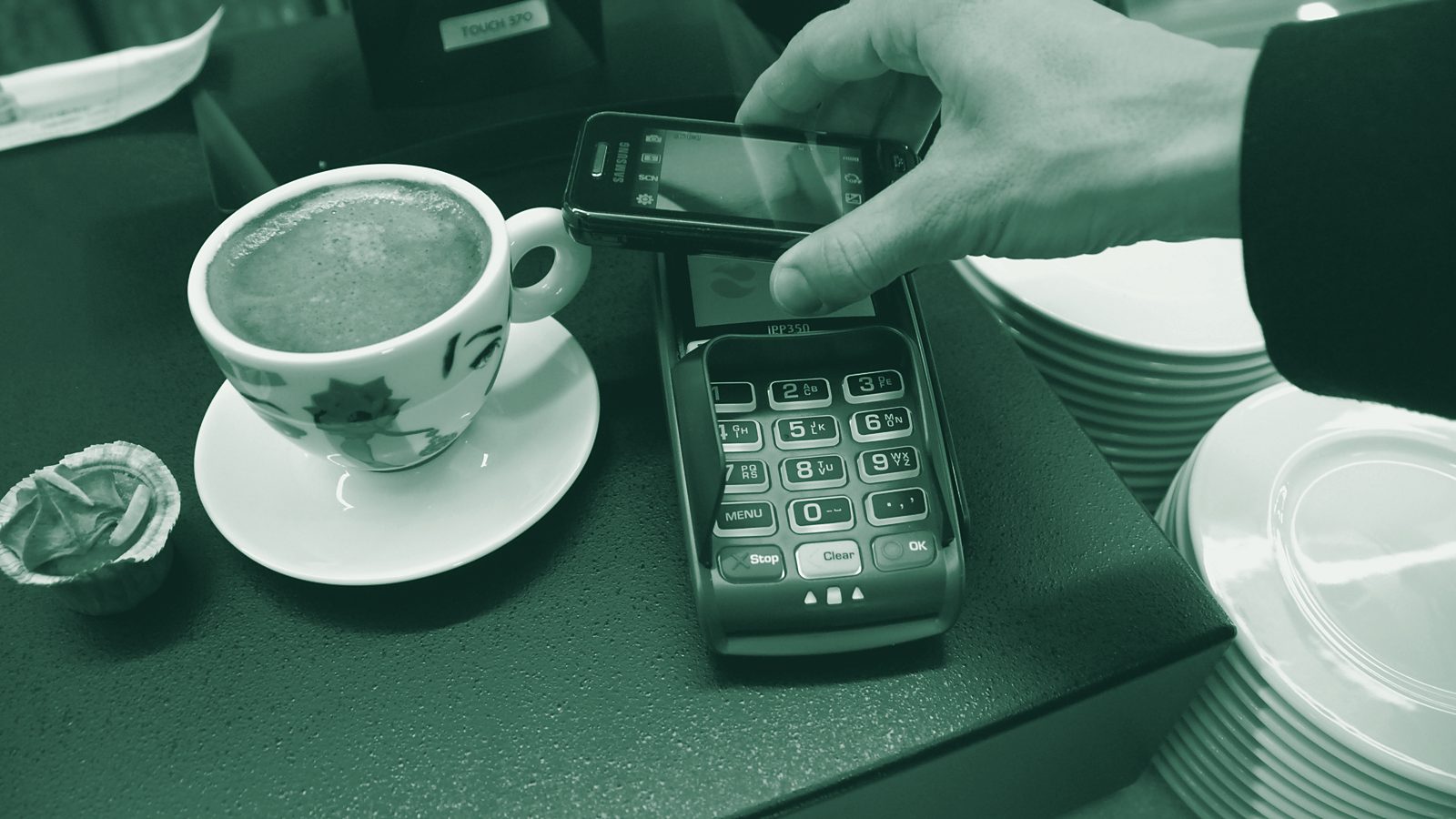
A digital wallet is software that keeps the details you need to pay, so you do not have to type a card number or carry the card. It can live in a phone, a smartwatch or a web browser, and it can be used in shops, online and to send money to other people.
The single most useful distinction is where the money sits. A pass-through wallet stores a stand-in for your existing card and moves the payment to that card or bank account; the money never rests in the wallet. A stored-balance wallet, typical of person-to-person payment apps, lets you keep money inside the app itself. That difference matters a great deal if something goes wrong, as later sections explain.
Figure · Two kinds of digital wallet
Pass-through wallet
- Stores a token for your card
- Money stays with your bank
- Your card's own terms apply
- Common for tap-to-pay
Stored-balance wallet
- Holds money in the app
- Funds held by the app company
- Insurance depends on set-up
- Common for sending money
How does tapping your phone to pay work?
When you add a card to a phone wallet, your real card number is not simply copied onto the phone. Instead, the system issues an EMV payment token: a unique substitute for the card's primary account number, or PAN, which is the data fraudsters most want1. The standard behind it is managed by EMVCo, a technical body formed in 1999 and owned by American Express, Discover, JCB, Mastercard, UnionPay and Visa2.
A token is deliberately limited. EMVCo explains that it can be restricted to a particular merchant, device or payment scenario1, so a token captured from one phone or one online shop is far less useful elsewhere. Companies that issue tokens are registered as token service providers, and EMVCo assigns their codes worldwide1. EMVCo's tokenisation framework is still being updated; version 2.4 was published in July 20261.
Figure · What happens when you tap to pay
- 01Add cardbank approves the wallet
- 02Token issuedstored on this device
- 03Tap at tillphone sends the token
- 04Network checkstoken linked to card
- 05Bank approvespayment completes
After the token leaves the phone, the payment follows the same route as any card payment, through the merchant's provider, the card network and your bank. Our guide to how card payments work follows that route step by step.
Is paying with a phone safer than using a card?
Tokenisation was designed to make mobile and online payments more secure by keeping the real card number out of the transaction1. Wallets on phones and watches also usually require you to unlock the device before paying. That combination removes some common risks, but not all of them.
What a phone wallet changes, and what it does not (general features)
| Risk | Plastic card | Phone wallet with tokens |
|---|---|---|
| Card number seen by the shop | Yes, on the card and in the transaction | No, the shop receives a token |
| Stolen card details reused elsewhere | Possible if the number leaks | Harder: tokens are limited to a device, merchant or use |
| Losing the item | Anyone holding the card may try to tap it | The device lock adds a barrier |
| Being tricked into paying a scammer | Still possible | Still possible |
Is money in a payment app protected like a bank deposit?
Not automatically. In 2023 the U.S. Consumer Financial Protection Bureau (CFPB) found that funds kept in payment app accounts often lack deposit insurance and are not automatically swept into a linked bank account3. Payment apps handled about $893 billion of transactions in 2022, and more than 75% of US adults had used one3.
Some apps place customer money at insured banks under arrangements known as pass-through insurance, but the conditions vary by app and by account type4. Even when they are met, deposit insurance protects you if the bank fails, not if the app company fails4. If a nonbank payment app went bankrupt, its customers could find themselves competing with other creditors for what is left4.
Risk warning
Do not use a payment app as a savings account
The CFPB suggested that consumers may need to move balances out of payment apps themselves3. Keep only what you need for upcoming payments in an app balance, transfer the rest to an insured bank or credit union account, and read the app's terms to see where your money is held.
Who regulates digital wallets?
There is no single wallet regulator. Pass-through wallets sit on top of card payments, so the card network's rules and your card's terms still apply. For a stored-balance app, check which licence the provider holds where you live; our guide on how to check a regulated firm shows how.
In the US, the CFPB finalised a rule in November 2024 to supervise nonbank payment apps and wallets handling more than 50 million transactions a year, estimating that the most widely used apps processed over 13 billion consumer payments annually5. Congress overturned the rule under a resolution signed into law on 9 May 2025, so it has no force or effect6.
Figure · Key dates for digital wallets
- 1999EMVCo formed
- Jun 2023CFPB deposit insurance warning
- Nov 2024CFPB payment app rule
- May 2025Congress overturns the rule
- Jul 2026Token spec version 2.4
What mistakes do people make with digital wallets?
Common beginner mistakes
Leaving savings in an app balance
An app balance is not the same as a bank deposit, and insurance never covers the app company's own failure4.
Assuming all wallets work the same way
A tap-to-pay wallet linked to a card and a stored-balance app carry different protections. Check which one you are using.
Sending money to strangers through payment apps
Treat a person-to-person transfer like handing over cash: only pay people you know and trust, and double-check the recipient before you send.
Not locking the device
The device lock is part of the wallet's security. A phone with no passcode leaves the wallet open to anyone who picks it up.
Confusing a payment wallet with a crypto wallet
A crypto wallet manages private keys for blockchain assets and works very differently; see our explainer on crypto wallets and keys.
Frequently asked questions
Does the shop see my card number when I pay with my phone?
Not when the wallet uses EMV tokenisation. The shop receives a token that replaces your card number1, so your real number is not part of the transaction.
What should I do if I lose my phone?
Lock or erase the device using its find-my-device service and contact your card issuer to deactivate the wallet token for that device. Tokens can be limited to a single device1, which is what makes this targeted switch-off possible.
Is a payment app balance covered by deposit insurance?
Only if the app holds it at an insured bank under conditions that qualify, and even then only against the bank's failure, not the app company's4. Check the app's terms.
How many people use payment apps?
In the US, the CFPB reported in 2023 that more than three in four adults had used a payment app3.
Can a digital wallet hold money in other currencies?
Some stored-balance apps can. Converting between currencies usually involves an exchange-rate margin, which our guide to cross-border payments explains.
The bottom line
A digital wallet is either a secure stand-in for your card or a place where money actually sits, and some apps are both. Tokenisation keeps your real card number out of shop systems, which makes stolen details less useful. A stored balance is different: it may not be insured, and insurance never covers the app company itself. Keep balances small and know which kind of wallet you are using.
Sources
- EMV Payment Tokenisation — EMVCo, 2026 Primary source
- About EMVCo — EMVCo Primary source
- CFPB Finds that Billions of Dollars Stored on Popular Payment Apps May Lack Federal Insurance — Consumer Financial Protection Bureau, 2023 Primary source
- Issue Spotlight: Analysis of Deposit Insurance Coverage on Funds Stored Through Payment Apps — Consumer Financial Protection Bureau, 2023 Primary source
- CFPB Finalizes Rule on Federal Oversight of Popular Digital Payment Apps — Consumer Financial Protection Bureau, 2024 Primary source
- Public Law 119-11 (S.J.Res. 28): disapproval of the CFPB rule on general-use digital consumer payment applications — U.S. Government Publishing Office (GovInfo), 2025 Primary source
How we checked this page: every figure above links to the numbered source it came from. Spotted an error? Tell the desk — see our editorial policy.
Read next
 Fintech · ExplainerHow do card payments work, from tap to settlement?A card payment feels instant, but it is really a short conversation between several companies, followed by a slower exchange of money behind the scenes. Here is who is involved, what each one does and who pays for it.
 Tech · ExplainerHow do crypto wallets and private keys work, and what happens if you lose them?A crypto wallet does not hold coins. It holds the secret that proves you control them. Understanding that one idea explains almost every way people keep, and lose, crypto.
 Fintech · ExplainerWhat is a neobank, and is your money protected in one?A neobank looks like a bank on your phone, but behind the app it may or may not be one. Who actually holds your money decides whether deposit insurance protects it, and how quickly you could get it back if something breaks.
 Fintech · ExplainerWhat are real-time payments, and how do they move money in seconds?In a growing number of countries, money can leave one bank account and be usable in another a few seconds later, at any hour. Here is how these systems work, where they came from and why an instant payment needs extra care.
 Fintech · ExplainerWhy is sending money abroad still slow and expensive?Paying someone across town takes seconds. Paying someone across a border can take days and cost several percent of the amount. Here is where the money and the time go.