News analysis ·
Revolut and Section 166: how a skilled person review works
The Bank of England's PRA has ordered an outside review of Revolut's product approvals. We explain how a Section 166 order works and what it changes.
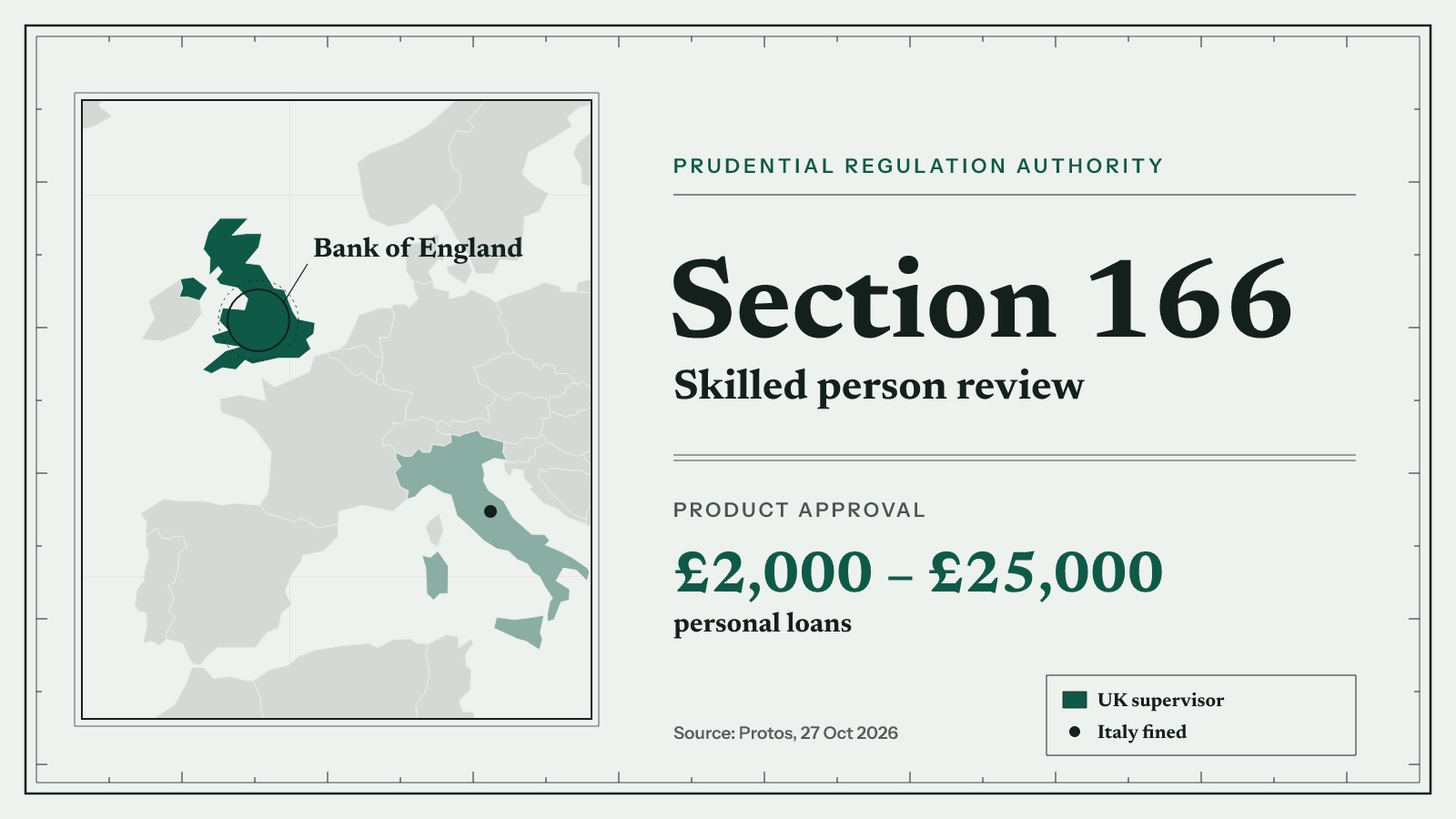
The Bank of England's banking supervisor has told Revolut to bring in outside experts to examine how it approves new products, Protos reported, citing the Financial Times. The tool it used is called a Section 166 order. This article looks at what that order is, why a supervisor reaches for it, and what it means for a bank that only recently got its licence.
What happened
According to Protos, the Prudential Regulation Authority, which is part of the Bank of England, issued a Section 166 order to Revolut. The order requires the firm to hire outside experts. Their job is to judge how robust Revolut's internal practices are. In effect, Revolut is being made to investigate its own systems, at the supervisor's direction.
The review focuses on how Revolut approves and launches new financial products, and on whether the firm broke any laws. The Bank of England reportedly filed the review around Spring. Revolut had been granted a UK banking licence in March. The report also quotes the company's culture: CEO Nik Storonsky has described employees as "self-guided missiles", with little oversight on product development, according to Protos.
How a Section 166 order works
In the UK, bank supervision is split between two bodies. The Prudential Regulation Authority, or PRA, looks after safety and soundness: whether a bank holds enough capital, manages risk and is run in a way that will not cause harm if things go wrong. The Financial Conduct Authority looks after how firms treat customers. Section 166 is a power in UK financial services law that lets these regulators require a review by a so-called skilled person.
A skilled person is an independent expert, often from an accounting, consulting or law firm, with the right specialist knowledge. The mechanism has a few distinctive parts:
- The regulator decides the scope: which systems, processes or questions the review must cover.
- The firm appoints and pays the skilled person, but the regulator must be satisfied with the choice.
- The expert reports to the regulator, not just to the firm's management.
- The findings feed into what the supervisor does next, which can range from a remediation plan to tighter limits or, where laws were broken, enforcement action.
The point is leverage. A supervisor has a small team per firm. A Section 166 review lets it put deep, independent scrutiny on a specific weakness without doing all the work itself. It is a supervisory tool, not a penalty in itself, but it signals that the regulator is not yet comfortable with how a firm is run.
Why product approval is the pressure point
Product approval sounds like back-office paperwork. For a bank it is a core control. Every new product brings new risks: credit risk if customers cannot repay, conduct risk if the product is sold badly, and operational risk if systems are not ready. A good approval process asks who checked those risks, who signed off, and what happens if the product goes wrong.
Revolut is moving into exactly the kind of products where those questions bite. Protos lists personal loans from £2,000 ($2,600) up to £25,000 ($33,000), and plans to enter mortgages and credit cards. Lending is where a bank puts its own balance sheet at risk.
There is also a pattern across borders. During 2025, the European Central Bank put a temporary curb on new product releases by Revolut's European branch, partly over concern about how fast it approved products. Italy fined Revolut €11.5 million ($12.8 million) this year over misleading information on its investment products and aggressive, misleading methods, Protos reported. On the operational side, customers suffered data breaches in September after DriveWealth, Revolut's third-party US broker, was hit by a social engineering attack, and services were temporarily halted after a power outage affected Google Cloud.
What changes, and for whom
For Revolut, the order means cost, time and scrutiny. Management must cooperate with an outside team, open its processes to inspection and act on what the report finds.
For customers, a Section 166 order does not by itself change the status of their money. It is a check on how the bank is run. The practical lesson is broader: a banking licence is not a single approval but an ongoing relationship with a supervisor, and the supervisor's tools keep working after the licence is granted.
Open questions
The reports leave several things unclear. They do not say who the skilled person is, how long the review will take, or when its findings will reach the regulator. They do not say whether the review will limit Revolut's planned move into mortgages and credit cards while it runs. And because the question of whether any laws were broken is part of the review itself, it is not yet known whether any enforcement will follow. It is also unclear whether the findings will ever be made public, so outsiders may only learn the outcome through the supervisor's later actions.
Sources
- Protos, 27 Oct 2026
How this post was made: an AI model drafted it from the sources listed above, and software checks ran before it went live without a human edit. Every figure has to match a listed source and no sentence is copied. It explains how the mechanism works; it is not investment advice.