News analysis ·
How offshore forwards move emerging market currencies
A BIS paper finds offshore NDF trades push onshore exchange rates even behind capital controls. We explain how the pressure travels and why banks matter.
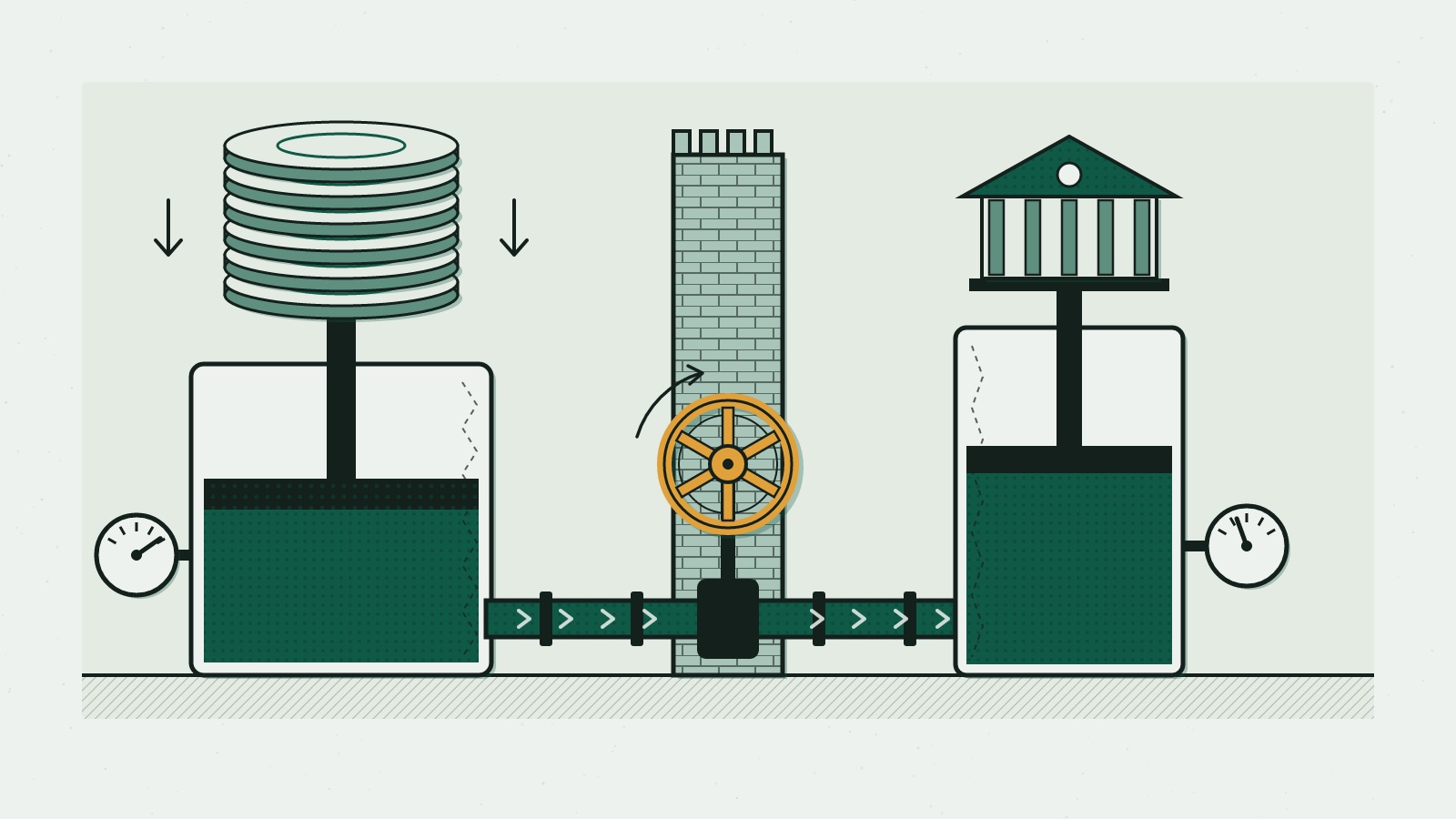
A new working paper from the BIS finds that dollar buying in offshore currency markets reaches the exchange rate at home within minutes, even in countries that use capital controls to keep foreign money out. This article looks at the instrument behind that link, the non-deliverable forward, and at the role local banks play in passing the pressure along.
What the BIS study found
The paper, published by the Bank for International Settlements on 2026-10-16 and written in its Monetary and Economic Department, studies trading in non-deliverable forwards, or NDFs, on 10 emerging market currencies. The researchers used records of individual trades that were centrally cleared through LCH ForexClear. The BIS summary gives the period as 2014 to 2025, while the abstract says 2013–2025. According to the BIS, this is the first study of NDF pricing built on signed, trade-by-trade order flow rather than on quoted prices or total volumes.
The headline result is about size and speed. An extra $1 billion of offshore demand for dollars moves the local spot exchange rate roughly 10 basis points, within minutes. The same flow shifts the offshore NDF price roughly 18 basis points. Offshore buying also pulls the two forward prices, abroad and at home, further apart, and the effect on the local spot rate is stronger when dealers have little spare room on their balance sheets.
How an NDF works
A forward is a deal to swap two currencies at a fixed rate on a future date. A non-deliverable forward is a version where the local currency never changes hands. At maturity, the two sides compare the agreed rate with the official rate on that day and settle only the difference, usually in dollars. Investors abroad can thus take a view on a currency without a local account.
This is why NDFs exist mostly for currencies whose governments restrict foreign access. The trading happens offshore, in financial centres abroad, while the real currency trades onshore under local rules. Central clearing adds one more layer: a clearing house stands between buyer and seller, so each side faces the clearing house rather than each other.
How the pressure crosses the border
If foreigners cannot buy the currency onshore, how does their offshore trading move the onshore price at all? The BIS model describes a chain with a few links.
- Investors abroad want exposure to the currency, so they buy or sell NDFs. That creates order flow offshore.
- Dealers on the other side of those trades end up holding a currency position they did not want.
- To offset it, dealers trade in the domestic spot market, where the real currency changes hands.
- Capital controls limit how freely banks can arbitrage between the offshore and onshore forward markets, so the two prices can drift apart.
The model separates two forces. One is offshore appetite for currency exposure, which pushes the offshore price and the offshore-onshore gap in the same direction. The other is the cost banks face when they try to bridge the two markets. When that bridging cost is high, the gap stays wide.
Here is how to read the two headline numbers together. The offshore price moves about 18 basis points and the onshore spot rate about 10 for the same $1 billion of dollar demand. The offshore market absorbs the larger hit, and only part of it is carried home. The share that crosses depends on how easily dealers and banks can move positions between the two sides. A basis point is one hundredth of a percentage point, so these are small moves for a single flow, but they arrive fast and can repeat.
What changes, and for whom
The policy lesson in the paper concerns bank access, not just capital controls. The researchers looked at rule changes on whether local banks could trade NDFs abroad: one in China, one in Malaysia and two in India, covering the renminbi, the ringgit and the rupee. India gives the clearest example. The offshore-onshore gap shrank after Indian banks were allowed to trade offshore in 2020, then grew again once that access was curbed in 2026.
In the words of the paper, "offshore trading affects onshore exchange rates even where capital controls limit direct access to the domestic market". For central banks, that means a currency wall is never fully sealed. The real choice is how tightly to regulate banks that work on both sides. Letting banks in narrows the price gap but opens a wider channel for offshore pressure. Keeping them out widens the gap.
What the paper leaves open
The study measures how prices respond to order flow. It does not say which policy setting is best. The data covers centrally cleared trades only, so deals settled outside the clearing house are not part of the picture. Finally, the finding that tight dealer balance sheets amplify the spot impact raises a question the paper does not settle: how these channels behave in a stress episode, when balance sheets shrink across the market at once.
Sources
- BIS, 16 Oct 2026
How this post was made: an AI model drafted it from the sources listed above, and software checks ran before it went live without a human edit. Every figure has to match a listed source and no sentence is copied. It explains how the mechanism works; it is not investment advice.