News analysis ·
Tokenized stocks: how issuers veto the OKX-ICE venue
Wells Fargo, Arm and Intuit join the companies blocking tokens of their shares on OKXICE. How the SEC exemption's objection window works.
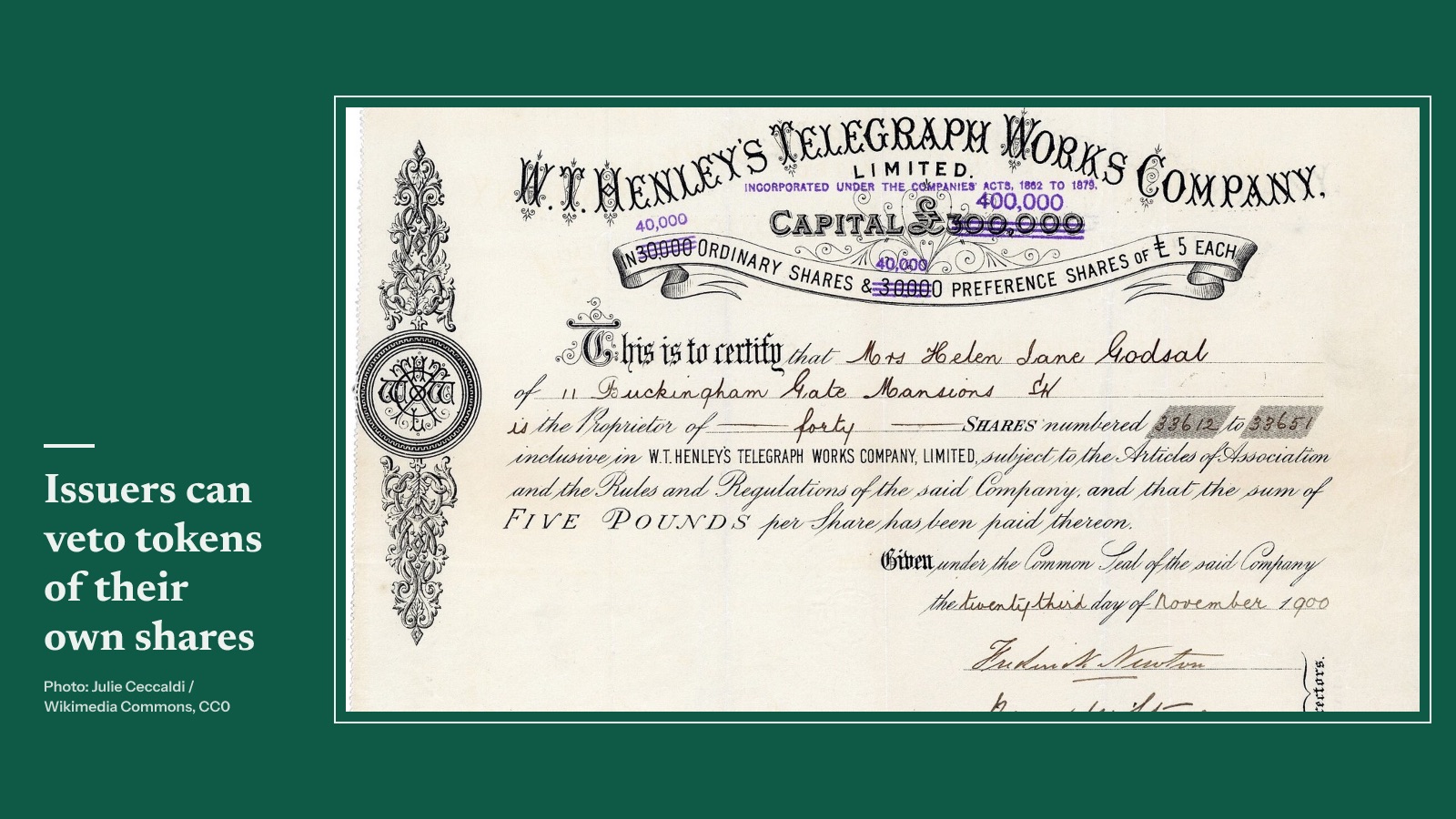
Six more US companies, among them Wells Fargo, Arm Holdings and Intuit, have told OKXICE not to list tokens that track their shares, Unchained reported, citing Reuters. The venue is a joint project of Intercontinental Exchange and the crypto exchange OKX. This article looks at the rule that gives a listed company a veto over a token of its own stock, and what that veto means for the venue.
What happened
According to Reuters, which cited a regulatory filing, the new objections bring the number of companies refusing to be listed to 22. Reuters did not name the remaining three new objectors. Unchained said it had not seen that filing itself, and that the most recent public notice it could find on the venue's website was dated Oct. 19.
The list has grown fast. The Oct. 15 notice named nine objectors, including Broadcom, Verizon and UnitedHealth. By the Oct. 19 notice the tally stood at 16, with Alphabet, Microsoft, Goldman Sachs, Qualcomm, Caterpillar, McDonald's and Western Digital among the additions. OKX and ICE had planned tokens for 63 stocks. No launch date has been announced. As of the Oct. 19 notice, Nvidia, Tesla, Apple and Amazon still had no objection on record among the names first planned.
How this works: the issuer's veto
A tokenized stock is a digital token, recorded on a blockchain, that is meant to track the value of an ordinary share. When the company that issued the share did not create the token itself, the token is a third-party product. The issuer did not design it, does not run it and may not want its name attached to it.
OKXICE operates under a five-year SEC exemption granted on Sept. 17. An exemption is a formal permission from the regulator to skip a rule that would normally apply. Here, it lets qualifying tokenized-stock platforms run without being treated as an exchange. In return, the venue must follow a set of conditions, and the most important one in this story gives issuers a say:
- Notice: before listing a token of shares the issuer did not create, the venue must notify that company in writing.
- Waiting period: the venue must then wait at least 30 calendar days.
- Objection: if the company objects in writing inside that window, the token cannot trade.
- Disclosure: the venue must publish the objection in an updated public notice within five business days.
The design matters. The default is not silence equals refusal. The default is that listing goes ahead unless the issuer acts. Each company has to decide, and its decision becomes public. That is why the count can be followed notice by notice, from nine to 16, and then to 22 in the Reuters report.
How the venue itself is built
The trading plumbing is unusual for a stock product. The venue plans to use permissioned Uniswap v4 pools on XLayer. A pool is a smart contract holding two assets that traders swap against, instead of an order book matching buyers and sellers. Here, each stock token would be paired with a stablecoin, a token designed to hold a steady dollar value.
Permissioned means not everyone can trade. Only wallets holding a soulbound token issued by the venue will be allowed in. A soulbound token cannot be transferred, so it works as a pass tied to one wallet, after whatever checks the venue applies. The venue also states, in its own disclosures, that it lacks SEC registration for this business. It relies on the exemption instead.
Asset tokenization risks: what changes, and for whom
Asset tokenization means putting a claim on a traditional asset, such as a share, onto a blockchain. Its main risk in this case is a mismatch: the token tracks the share, but the issuer of the share may stand outside the arrangement entirely. The objection window is the rule's answer to that gap.
For the venue, every objection shrinks the product. A menu of 63 stocks with 22 objectors is a different offer from the one first planned. Large banks and technology companies are among those saying no, which removes some of the most familiar names.
For the companies, an objection is a written way to keep their shares out of a structure they did not approve. The reports do not say why each company chose to object.
For anyone considering such a product, the case is a reminder to check who stands behind a token. A token tracking a share is not the same as holding the share, and the legal rights may differ. Crypto-based products carry real risk, and a reader can lose money.
Open questions
The reports leave several points open. Reuters did not name the other three new objectors, and Unchained could not confirm the latest count against a public notice. The companies' reasons for objecting are not given. It is also unclear whether the remaining names, such as Nvidia, Tesla, Apple and Amazon, will object before any launch, and when that launch might come.
Sources
- Unchained, 23 Oct 2026
How this post was made: an AI model drafted it from the sources listed above, and software checks ran before it went live without a human edit. Every figure has to match a listed source and no sentence is copied. It explains how the mechanism works; it is not investment advice.